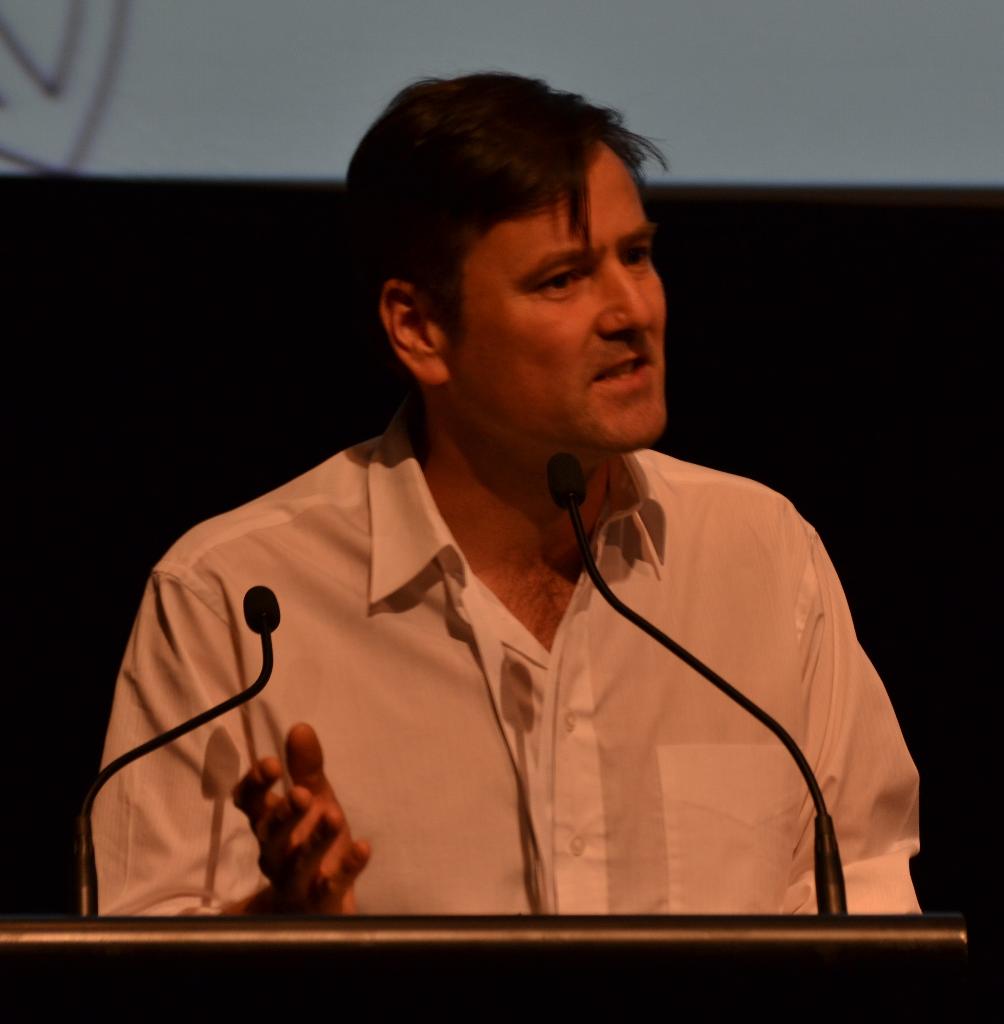
My nursing vision: NZNO AGM 2014 panel debate

2014.09.17-18 NZNO AGM SC D3100 301 Grant BrookesAt the NZNO AGM last year, I was invited to take part in a panel debate, on the topic “that substitution is good for nursing”. I joined the team arguing the negative.

In my five-minute speech to the assembled AGM delegates, I explained why substitution is not good for nursing. In doing this, I gave an overview of my nursing vision.

_____________________________________________________________________________

‘The steamer ‘Chelmsford’ trading between Parengarenga and Auckland, left at 10 o’clock a.m. on Tuesday with myself, the only passenger. As soon as we got out of the heads it started to rock… [We] reached Parengarenga Harbour at 10 a.m. Thursday… I was only too glad to get up and go ashore, as this was the first time I put my clothes on since I left Auckland. Mrs. Yates… received me so warmly that I soon forgot the horrors of my trip on the boat. After half-an-hour’s conversation with her, I learned that there was sickness in the Pah across that Harbour…

“I went round to all the houses, and in each of these there was a sick person, children mostly…

“Next morning after breakfast I walked to another Pah, about four miles, saw eight patients there, got back to the school-house at 7 p.m., too late to get across, and at 9 p.m. a Maori came to get me to see a man who was very bad with coughing, he said, and was spitting up blood… On my arrival there at 11 p.m. (you have to feel your way carefully, or you may land on your head, as the place is full of gum holes) I found he was suffering from acute pain in right side every time he coughs. On examining the sputum I found it was rusty, and the temperature was 101.4, pulse 144 respiration 48… I left the old man much easier… After breakfast I went to see him again… after seeing 23 patients in the Hapua settlement I came away feeling very much depressed I wish I could have done more for them… I left on horseback, with a guide, a distance of eighteen miles. It poured all the way there, and I was drenched to the skin.”

Hearing these excerpts from a letter to Kai Tiaki, dated July 1909, we begin to see why the name of Akenehi Hei remains synonymous with excellence in nursing practice over a century later.

What stands out from her letter is the enormous effort she made to be with the patient, to be physically present. And the way that nursing, for her, meant being in a caring relationship. “Feeling” and “wishing”.

These essentials of nursing come up again and again, across cultures, across generations.

Writing in California in the 1980s, nursing theorist Patricia Benner famously derived the elements of the helping role from interviews and observations of expert nurses.

“the expert nurses here had the self-esteem and self-confidence to see the value of their presence for their patients”, she said. “They point to the importance of touch and person-to-person contact between patient and nurse.”

It’s this closeness, and this time spent with the patient and their family – what has been called “the privileged place of nursing” – that allows holistic nursing assessment and holistic care.

So, if substitution is good for nursing, then you would expect it to increase our person-to-person contact with our patients and their families. You’d expect it to increase the time we spend with them, and make care more holistic.

But we’ve already experienced substitution of nurses in the healthcare team, haven’t we? We’ve seen the proliferation of unregulated caregivers such as Health Care Assistants. What has it brought us, in reality?

It’s turning nurses into directors and delegators. Instead of spending time in contact with our patients and their families, we’re spending it instructing and supervising staff. We are growing ever more distant from those we care for.

As we assess what can be safely delegated, the holistic vision of nursing care disappears into a set of tasks, to be shared out around the healthcare team – each one to be completed as quickly as possible.

As more tasks are delegated, we are losing the ability to actually “know the patient”.

And it’s turning us from nurses, into documenters. Instead of nursing the person, we spend more and more of our time operating this computer keyboard. And we hate it!

Don’t you agree…?

On the NZNO facebook page last month, there was a lengthy discussion about the high profile roll-out of the Releasing Time to Care programme in Auckland. One comment from a Waitematā DHB nurse got more likes than any other by far: “My job is pretty much data entry”, she said, “with random acts of nursing!”

Who here can relate to that….?

Substitution is not good for nursing. It is destroying nursing.

To return to Akenehi Hei, nursing is first and foremost about human contact, face to face, kanohi ki te kanohi.

Nō reira, rurea, taitea, kia tū ko taikākā anake.

In the words of this Māori proverb, strip away the bark and expose the heartwood.

See substitution for what it is. At its core, substitution is bad for nursing in New Zealand.”

• The NZNO AGM 2014 panel debate was also reported in Kai Tiaki Nursing New Zealand.

Promoting NZNO responsiveness to members

arrowsThe NZNO Membership Committee met in Wellington on 26 March. They key issue for discussion was improving the group’s effectiveness.

The Membership Committee is one of two new standing committees of NZNO, along with Te Poari, which were established when the Constitution came into effect in 2012. Its purpose is still not widely understood.

The Committee performs an important, but difficult function. Primarily, it provides the Board of Directors (BOD) with insight into the views and needs of the diverse membership of NZNO at the local level. In doing this, it has to articulate regional, college, section and student membership issues and ensure that NZNO is responsive to the needs and issues of members.

But it is difficult to articulate issues when they are not being voiced strongly by members through these bodies. The difficulty has been compounded by, and contributed to, a high turnover of committee members and chairpersons since 2012. In addition, said resigning chair Jennie Rae, there has also been a perceived lack of support for the committee from BOD.

The meeting elected a new chair, Hawkes Bay Regional Council representative Sandra Corbett, and adopted plans to improve effectiveness.

Reports of member issues were given. For colleges and sections, a focus of work at present is the development of nurse prescribing. Member issues in the regions included private hospital mergers and DHB integration, increased use of on-line learning for professional development in their own time, and the DHB MECA campaign. National Student Unit representative Sacha Lawrence spoke about the student survey and about recruitment issues.

As well as articulating member issues, the committee also helps to administer the Florence Nightingale Fund to support nurse education, in partnership with Te Poari. And it works on specific projects, as agreed with the BOD.

The meeting decided to take up the issue of voting strengths at the NZNO AGM, which sets the overall strategic direction and policy of the organisation. Currently, AGM voting is by group. So if a member belongs to more than one group (for example, Te Rūnanga and a college or section, as well as a region), then their vote is counted more than once. Previous attempts to resolve this problem have been unsuccessful.

The elected representatives on the Membership Committee comprise one person from each Regional Council, two from the National Student Unit and two from the Colleges and Sections. If members would like issues to be raised with BOD, they can contact their representative via the Membership Committee webpage.

  • Report by committee vice-chair and Greater Wellington Regional Council rep Grant Brookes. An abridged version of this article appears in the April 2015 issue of Kai Tiaki Nursing New Zealand.

Why I’m standing for NZNO President

election_logoI am one of you.  As a practising nurse, I know the realities for members delivering care in the community and at the bedside.  I experience the pressures of unsafe staffing, low pay and unfair treatment at work. But I know that together, we’re strong enough collectively to change all that.

I’m standing for President to inject new energy into NZNO.

I will speak up for members seeking to be respected, valued and given the resources needed to do the job. And I will keep NZNO focused on tackling the distressing health inequalities we see daily in our practice.

As your next President, I will accept only my current Staff Nurse pay rate. NZNO members work hard for their money, and there are better uses for the dues you pay than a six-figure presidential salary.

I will bring the passion born of decades of activism, coupled with the prudent stewardship shown in governance roles within NZNO and in the wider health sector.

Too often, professional issues in nursing are viewed separately from industrial realities. And our common cause as nurses, midwives and healthworkers can get lost.

I bring all-round experience, having served at the highest level in both the industrial and professional wings of our union. I have  been active in NZNO’s Aged Care, Primary Health and Private Hospital Sectors, as well as heading the National Delegates Committee for the DHBs. This year, DHB Sector members have shown their trust in me, electing me onto the team negotiating the MECA for all 26,000 of us.

I also bring a proven track record in governance. From my role in leading the efforts to make our Constitution more democratic, to my present role as Membership Committee Vice-Chair, I have worked to make NZNO more responsive to members. I have chaired my NZNO Regional Council, served on NZNO’s Board of Directors and I now represent the Council of Trade Unions on the Board of the Newtown Union Health Service.

In 2013, I was honoured to be the only North Island candidate in the DHB elections to receive NZNO endorsement.

No one person can embody all the rich diversity of our membership. But as a professional, I know when I’ve reached the limits of my own knowledge and experience, and when I need to listen to others. In this way, I will also strengthen NZNO’s bicultural partnership.

I pledge to:

  • Be accessible to members. I will be available to you, in person in your locality or via email and social media.
  • Make your issues visible. I have the credibility and the media skills to get nursing onto the agenda for decision-makers, and for the public they’re accountable to.

This election is about your choice, your voice. Use your vote to elect Grant Brookes as your NZNO President.

_____________________________________________________________________________

Te take e tū ana ahau hei Perehitini mō NZNO

Ko ahau tētahi o koutou.  He nēhi ahau, nō reira e mōhio mārika ana tēnei ki ngā āhuatanga katoa o ngā mema e mahi tahi ana me ngā hapori, ki ngā taha moenga tūroro hoki.  Kua waia ahau ki ngā pēhitanga, ki ngā utu koretake, ā, ki ngā mahi tūkino e pā mai ana ki a tātou ngā nēhi.  Engari e mōhio ana ahau, mā te mahi tahi ka taea e tātou te piki i ngā taumata angitu.

E tū ana ahau hei Perehitini kia whakakahangia te NZNO me tētahi riaka hou.

He māngai ahau mō ngā mema e whai ana i tēnei mea te mana me te ihi i roto i a tātou mahi, ā, kia riro i a tātou ngā rauemi katoa kia rangatira ai te mahi nēhi.  Ā, ka aro tōtika te titiro a NZNO ki ngā rongoā whakaora ai i ngā raruraru hauora ka kite atu i roto i a tātou mahi, ia rā, ia wā.

Mei ka tū hei Perehitini, ka whakaae ahau ki te utu nēhi anahe.  He pukumahi ngā mema NZNO nō reira he maha atu ngā kaupapa pai ake hei utua ka tika, atu i te utu nui o te Perehitini.

Ka mau mai ahau āku hiahia, āku mahi katoa i whānau mai i ngā tekau tau ki muri, āku mahi kāwanatanga i roto i te NZNO, ā, i roto hoki i te rāngai hauora whānui.

I te nuinga o te wā, ka titiro wehenga rua ngā tikanga ngaio ki ngā ahumahi o te nēhi.  Ā, ka ngaro atu tā tātou kaupapa kotahi, nēhi mai, kaiwhakawhānau mai, ā, kaimahi hauora mai.

Ka mau mai ahau āku wheako katoa mai i āku tūnga ahumahi, ngaio hoki i mahia e au kei ngā taumata teitei o te uniana.  He tangata pukumahi ahau i roto i ngā wāhanga e toru o NZNO, arā te Tiaki Kaumātua, Hauora Matua, Hauora Motuhake, ā, me taku tūnga whakahaere i te Kōmiti Taraketi ā-Motu mō ngā DHB.  I tēnei tau, i waimārie au nā te mea i tohua ahau e ngā mema o te rāngai DHB ki runga i te rōpū whakahaere te MECA mō ngā mema nēhi 26,000.

Ā, ka mau mai anō ahau āku pūkenga, āku mahi kāwanatanga.  Mai i āku mahi whakamanapori mō tā tātou ture kāwanatanga ki taku tūnga ināianei, arā te Heamana-tuarua o te Kōmiti Mematanga, ā, ka mahia e au kia whakararata a NZNO ki ōna ake mema.  I tū ahau hei Heamana mō taku NZNO Kaunihera ā-Rohe, i noho i runga i te NZNO Poari mō ngā Kaitohu, ā, ināianei ko ahau te māngai mō Te Kauae Kaimahi i runga i te Poari, Newtown Union Health Service.

I te tau 2013, nōku anō te hōnore ko ahau anahe o ngā kaitono o Te Ika-a-Māui i whiwhia i te tautoko a NZNO mō ngā kōwhiringa DHB.

E kore taea te tangata kotahi ki te whakatinanatia i ngā momo katoa o ā tātou mema.  Engari e mōhio mārika ana he aha āku pūkenga me āku wheako, ā, e mōhio hoki ana āhea ahau ka whakarongona ki ētahi atu.  Nā reira, ka taea e au te āwhina atu i te NZNO me tōna kaupapa tikanga rua a te tāngata Māori me te Pākehā.

Nāku ēnei kupu taurangi:

  • kia wātea ahau ki ngā mema katoa kei tō ake takiwā, kei runga īmēra raini, ā, kei te pae pāpāho pāpori hoki.
  • kia puta ai o tātou kaupapa nēhi i te pō ki te whaiao, ki Te Ao Mārama.

He kōwhiringa tēnei mōu nō reira kei a koe te tikanga, kei a koe tō ake reo.  Ā, whakamahia i tō pōti kia tū ai a Grant Brookes hei Perehitini mō NZNO.

======

Previous relevant experience/Āku mahi, āku tūranga, āku wheako hoki

DHB MECA Negotiating Team (2014-present)

Membership Committee: Greater Wellington Region rep & Vice-Chair (2014-present)

Mental Health Nurses Section: Committee Member & Journal Co-editor (2014-present)

Newtown Union Health Service: Board Member (2013-present)

DHB National Delegates Committee: CCDHB rep & Convenor (2008-present)

NZNO-endorsed candidate for CCDHB (2013)

NZNO Board of Directors (2012-13)

NZNO Greater Wellington Regional Council Chair (2010-13)

NZNO Relief Organiser (2010)

NZNO Workplace delegate (2002-present)