The President comments: ‘2017 – A year filled with possibility’

kai-tiaki-feb-2017-cover
First published in Kai Tiaki Nursing New Zealand, February 2017. Reposted with permission. 

Summer will soon be officially over, and 2017 well under way. It’s time to think about what the year ahead will hold.

For NZNO members, this year is filled with possibility. In 2017, we will have a real ability to make change for the better. And don’t we all need that!

Summer is often the season which reminds us most of life outside work. But when we’re run ragged through understaffing, and leave work exhausted, everyone misses out. Our friends and families don’t see us at our best. Our patients don’t get the best from us. We miss out ourselves, too, on the good things we see others enjoying.

Funding squeezes, year on year, have created an ever-increasing pressure to “do more with less”. This pressure is now being felt across the health sector.

It has pushed resident doctors in district health boards (DHBs) to take escalating industrial action, just to get rosters and staffing levels which don’t leave them burnt out, and on the edge of unsafe practice. St John Ambulance professionals can’t get the rest and meal breaks they need so they’re fit to make decisions on the job. In many places, ambulances still aren’t fully crewed with skilled staff.

Funding squeezes also mean that more and more people are missing out on the health care they need, while new grad nurses who could provide care struggle to find work. So how can we change this for the better?

Day in and day out, nurses and midwives at all levels claim the right to take part in decision-making, based on our professional expertise and experience. But in 2017, the opportunity for all NZNO members to influence the future of health will be greater, due to the alignment of two major events.

Renegotiation of the DHB multi-employer collective agreement (MECA), which expires in July, will enable close to 30,000 of us to have a say about conditions in the public health system. The general election  in September allows every member to have a say about this country’s priorities – not just as an individual voter, but also as an influential member of their community.

Nursing’s full power

Professionalism gives us a voice. But it’s the synergy between professional authority, industrial strength and political enfranchisement – like the one developing this year – that releases the full power of nursing.

That’s not to say it’s going to be a walk in the park. The resident doctors are facing an uphill battle and attacks in the media. Ambulance professionals suffered 10 per cent pay cuts designed to weaken their resolve.

But public support for the doctors has been overwhelming. In a 1 News Facebook poll, 95 per cent of respondents supported their strike last month.

And the “ambos” have showed that when you stick together and stand firm, fairness can win. In mid-January, St John backed down on the pay cuts and talked about repaying all wages they’d deducted.

For us, if you’re in a DHB the first step in making change is exercising your right to attend the MECA meetings which start in May. Times and places will be advertised by NZNO delegates and organisers.

Then, in the election, NZNO won’t tell members who to vote for. But staff will produce resources to enable you to make an informed vote for a government which values health, and to support conversations with family, friends and workmates so they can do the same.

There are 48,000 NZNO members, and many more potential supporters. There is power in numbers. Chances like this may not come around again for a while, so this year we need to seize our opportunities and use our power for nursing and health. •

Responding to the winds of change

kai-tiaki-cover-12-16
First published in Kai Tiaki Nursing New Zealand, December 2016. Reposted with permission.

My personal reflections on the last 12 months?

Sometimes, for what seems like ages, it can look like nothing much will ever change in the world. Then along comes a year where it’s as if someone has hit fast forward. Things are changing so quickly you wonder what could happen next.

Looking back from the cusp of the New Year, it appears to me that 2016 has been one of these times of rapid change.

It’s not just Donald Trump. Dissatisfaction with the status quo has boiled over in a series of world events which have disrupted “business as usual”, even in far-flung New Zealand.

Faced with rapid change, people have a choice. They try to can carry on, as if nothing’s different. Or they can think afresh, and come up with new ideas to fit the new reality.

‘A strange figure’

Sadly, our Government this year has chosen the former. Prime Minister John Key cut a strange figure on the world stage in November, continuing to promote the harmful Trans- Pacific Partnership Agreement (TPPA), long after most other people in the room knew it was dead.

He and his ministers also continue to trot out the old mantra of tax cuts, rather than think anew about restoring investment to fully fund our creaking health and social services.

In a peculiar turn, voters are even telling the pollsters they no longer want tax cuts. In the past, the Government could perhaps reply that it was acting in accordance with advice on tax cuts from overseas experts. But the world has moved on here, too, leaving our tax-cutting politicians behind.

At times like these, nurses have a special opportunity – and responsibility – to bring forth the new ideas that are needed.

The winds of change

Our American sister union, National Nurses United (NNU), felt the winds of change sooner than most. In August 2015, they became the first major union to endorse Democratic hopeful Bernie Sanders for United States (US) president. Echoing Sanders, NNU executive director RoseAnn Demoro observed, “This is not a conventional moment, we are fighting for the future of this country”.

“Caring, compassion, and community. These are the values at the heart of registered nursing”, said NNU. “This is true at the bedside, as nurses advocate for patients and families – and also beyond the walls of the hospital, as RNs call for environmental, racial, and economic justice in the name of public health.”

Sanders’ embrace of a “democratic socialist” label would, in any normal year, have consigned him to America’s political fringes and electoral oblivion. The fact he came such a close second in the primary contest, after winning 13 million votes (43 percent of the total) underscores just how far from “a conventional moment” 2016 has been.

Despite considerable pressure, NNU stuck to its position, even after Hillary Clinton was chosen by the Democratic Party to be its candidate. NNU’s conviction that it was in tune with the rapidly changing times was, as DeMoro put it, because “nurses take the pulse of America, and have to care for the fallout of every social and economic problem”.

When Trump secured victory after a divisive campaign, NNU ruefully observed, “This election is a reminder that in a populist moment of people yearning for change, it was not a moment for business as usual, establishment politics. If Senator Bernie Sanders had been the Democratic candidate, we would be looking at a very different outcome today.”

Although it’s largely external events which have so far disrupted business as usual in New Zealand, similar winds of change are also blowing here. Asked in a poll to choose between Donald Trump and Bernie Sanders, New Zealanders favoured Sanders by a margin of 10 to one.

But, equally, the channelling of dissatisfaction towards new migrants and other minorities is also starting to appear.

NZNO is at the forefront of some of the new thinking that’s needed. The day after the US election sealed the fate of the TPPA, kaiwhakahaere Kerri Nuku and I wrote to government support partner, United Future leader Peter Dunne, asking him to withdraw his support for the TPPA enabling-legislation. A single vote would have been enough to prevent pointless changes to 11 of New Zealand’s laws, based on a trade agreement that was dead in the water.

But I think we need to do more updating, because one conclusion I draw from these reflections on the year is that “business as usual” is a recipe for failure in rapidly changing times.

Personally, I agree with the NNU that now, “the agenda for real transformative change of our broken political and economic system is the only way to protect our nation and our planet.”

At this month’s board of directors’ meeting, I will be asking the board to start a strategic discussion about our changing environment, and how we might collectively reposition our organisation in 2017 for the new realities that 2016 has brought. •

Atoifi Hospital leads the research agenda

SITUATED ON the east coast of Malaita Island, the Atoifi Adventist Hospital was established in 1966 by the Seventh Day Adventist Church. Now celebrating its 50th anniversary, the hospital has grown to include an extensive primary health-care service to remote villages. The attached college of nursing has become an official campus of Pacific Adventist University (PAU).

In the beginning, the Atoifi clinical staff struggled to deliver culturally safe care. The East Kwaio people, who the hospital serves, include some mountain tribes who have not converted to Christianity and who maintain traditional beliefs and customs. However, in recent years a new crop of hospital leaders have forged deep relationships with community leaders and tribal chiefs.

An effort to have local evidence inform local practice was a driving force behind improving cultural safety. In 2008, Atoifi Hospital invited public health academics at James Cook University (JCU) in Australia to help build research activities for hospital and college of nursing staff. From there, the Atoifi Health Research Group (AHRG) was born. Today, its academic partners also include the PAU in Papua New Guinea, CQUniversity in Queensland and the London School of Hygiene and Tropical Medicine.

IMG_4893.JPG
NZNO president Grant Brookes with traditional medicines researcher Tommy Esau.

Ten members from AHRG presented a series of papers at the forum. Director of nursing and adjunct lecturer in the school of public health, tropical medicine and rehabilitation sciences at JCU Rowena Asugeni presented on how community efforts prompted the establishment of a culturally safe tuberculosis (TB) ward. Malaita Province has the highest incidence of TB in the Solomons, but Atoifi Hospital staff had noticed a problem of patients self-discharging before finishing their treatment.

Through research-based interviews, Asugeni found, in the words of one participant: “Last time hospital keepim olketa (mountain people) just next to the place wea olketa women give birth lo olketa pikinini yia. Lo culture blo Kwaio, dat wan hem very, very, very taboo something nao yia.” (In the past, hospital kept mountain people next to the place where women gave birth. In Kwaio culture, this situ- ation is absolutely forbidden.)

As a result of her research, the TB ward was re-designed and re-built to be culturally ap- propriate for Kwaio people.

A lecturer at PAU and adjunct lecturer at JCU, Humpless Harrington, presented the AHRG’s research model. He described the first research capacity strengthening workshop run by JCU academics at Atoifi. There were over 100 attendees, including village leaders, ministers and tribal elders. Despite sessions being conducted in both Pijin and English, concepts such as “naturalistic”,  “induction”, “empirical”, “positivistic”, were barriers for some of the people. They asked the JCU academics to come back for longer periods and use a practical “learn by doing” approach, so they did.

Humpress also presented a paper on eliminating soil-transmitted helminths. He said he had trouble getting his research published because the findings, that public health measures to eliminate these parasites on Malaita should be implemented village by village, were not in line with World Health Organisation (WHO) protocols.

“But that’s why you do research – to test prevailing wisdom,” Harrington said. Following the WHO protocols in the local context would have resulted in an over-use of drugs, rather than finding a local solution, he said.

AHRG researcher Tommy Esau presented on the “Kwaio traditional medicines handbook: customary treatment of head lice with the falange tree”. The medicines handbook has documented medicinal properties and tradi- tional uses of 15 plants found on Malaita.

Since 2009, research outputs from AHRG staff have included 15 papers published in a range of peer-reviewed international journals.

Today, the health service receives some government funding, but continues to rely on church support, foreign donors and local fundraising. More information can be found at www.atoifiresearch.org.sb. •


Solomon Islands face health challenges

THE SOLOMON ISLANDS are made up of nine culturally diverse provinces, each home to many wantok (tribal) groups and languages. It is situated northeast of Australia and just south of the Equator.

In his opening address, Solomons Prime Minister Manasseh Sogovare said that life expectancy in the country of 600,000 people had not increased since 2000, despite health spending making up 15 per cent of his government’s budget. The year 2000 also marked a turning point in the country’s history, when armed militants overthrew the government of Prime Minister Ulufu’alu. A five-year period of conflict was brought to an end in 2003, with military intervention led by Australian and New Zealand, but stability and development had not yet been fully achieved, Sogovare said.

Development issues are evident in the country’s relatively high infant, under-five and maternal death rates. More than 45 per cent of the population is under the age of 15. Efforts to address these issues featured prominently in one of the two streams in the forum’s concurrent sessions.

Less than 60 per cent of Solomon Islanders enter secondary school and fewer than five per cent finish Year 12, which is a requirement to enter a bachelor of nursing programme. Despite the challenges, the Solomon Islands has much to offer other NNAs in the South Pacific.

Decisions at AGM

The SPNF annual general meeting was held on the final day. This saw the adoption of a revised constitution, with the Cook Islands nursing association confirmed as the SPNF host in 2018. The steering committee is to prepare a draft five-year strategic plan. It was agreed the South Pacific Chief Nursing and Midwifery Officers Alliance would work with SPNF to align regional regulatory frameworks and postgraduate education requirements. *The SPNF communiqué can be found at: www.spnf.org.au/2016_General_Meeting/SPNF_Ho- niara_NNA_Communique_V2.pdf.

(First published in Kai Tiaki Nursing New Zealand, December 2016. Reposted with permission.)

Pacific nursing excellence

Culturally safe nursing care, the challenges of climate change and developing an indigenous nursing voice were some of the themes to emerge from the 18th biennial South Pacific Nurses’ Forum in the Solomon Islands.


DSC_0510.JPG

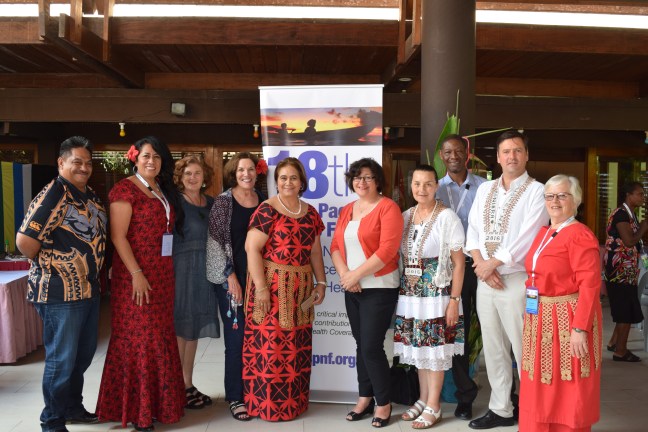
Some of the New Zealand delegates. From left: NZNO kaumātua Keelan Ransfield, Nursing Council board members To’a Fereti and Catherine Byrne, and chief executive Carolyn Reed, Pacific Nursing Section chair ‘Eseta Finau, NZNO kaiwhakahaere Kerri Nuku, president of Te Kaunihera o Ngā Neehi Māori Hemaima Hughes, NZNO chief executive Memo Musa and president Grant Brookes, and member of NZNO’s Greater Wellington Regional Council Jenny Kendall.

By president Grant Brookes

For the first time in its 34-year history, the South Pacific Nurses’ Forum (SPNF) was held in the Solomon Islands. More than 300 people gathered in the capital Honiara for five days at the end of October/early November – nurses and midwives, regulators, health sector leaders and representatives of national nurses’ associations (NNAs) from 10 Pacific nations.

The NZNO delegation comprised kaumātua Keelan Ransfield, Pacific nursing section chair ‘Eseta Finau, chief executive (CE) Memo Musa, kaiwhakahere Kerri Nuku and president Grant Brookes. There were eight others from New Zealand too.

Speakers addressed the theme “Towards nursing excellence for universal (Pacific) health” in plenary and concurrent sessions over the first four days, with cultural performances in the evenings. On the final day, NNAs and chief nursing and midwifery officers made a  series of decisions, including the need to transform nursing education, charting the way forward in the South Pacific over the next two years. From the opening address by Prime Minister Manasseh Sogovare, the health and social challenges facing the Solomons – as well as world-leading initiatives in culturally safe health-care emerging in the country – featured prominently. These included challenges posed by climate change.

It was also the first time the president of the International Council of Nurses (ICN) Judith Shamian had attended the SPNF. She spoke about ICN’s role in shaping global health and development strategies, including work towards universal health coverage by 2030, as mandated by the World Health Organization and the United Nations’ sustainable develop- ment goals. In her keynote address and in a later meeting with NNA representatives, Shamian encouraged stronger participation in ICN by South Pacific nurses.

This issue was taken up in a joint presentation by Nuku and Finau, Voice for the Pacific. Finau pointed out that ICN Region 7 comprised NNAs from Asia and the Pacific. “But at ICN, our issues are not discussed. We need to be at decision-making tables.”

This was why Nuku was standing for election to the ICN board next year. “This is the time when we Pacific nurses need to stand together,” said Finau. “Within our region, the SPNF should be driven by the NNAs. But the last two forums have been driven by the chief nurses.”

In a separate presentation, Building a resilient indigenous workforce, Nuku expanded on the theme of having a specific indigenous voice within Pacific nursing.

This subject was also addressed by Congress of Aboriginal and Torres Strait Islander Nurses and Midwives (CATSINaM) CE Janine Mohamed.

She spoke of the deepening collaboration between CATSINaM and Te Rūnanga o Aotearoa NZNO. The idea of global connectedness grew “from this great dialogue of support and commonality”, she said. CATSINaM is now proposing a global alliance of indigenous nurses and midwives.

Although acknowledging that “indigenous” means different things in different countries, the NNA representatives who met on the final day approved changes to the SPNF constitution which would allow groups like CATSINaM to apply for full membership of the forum.

In a presentation titled Pacific nursing excellence – cultural democracy is choice, Finau stressed the need for health equity, freedom to practise culture without discrimination and ethnic-specific services. “If you have Tongans talking to Tongans, the information will go further.”

Finau was one of several speakers who compared some foreign health advisers and aid partners to “mosquitos”. “They fly in, then fly out,” she said, “without ensuring succession planning, so there is someone to take over. They don’t focus on ethnic-specific services, but on other things like ‘economies of scale’.”

Stand-out presentations on culturally safe health-care for one specific ethnic group in the Solomons came from members of the Atoifi Health Research Group (see article below).

The final theme running through the conference was climate change. Presenters included Solomon Islands nurse Alison Ripiapu Sio, Cook Islands emergency department nurse Nga Manea and mental health instructor from Atoifi Adventist Hospital James Asugeni. Speaking on current and likely mental health issues from rising sea levels in a remote coastal region of the Solomon Islands, Asugeni said the main city on Choiseul Island was set to become the first provincial capital in the world forced to relocate due to climate change.

His research focused on six villages nearby, where rising seas are inundating houses and places where families and communities gather. He found mental health issues affected all the survey participants.

NNA leaders agreed to prioritise action on the causes and health effects of climate change in our closing communiqué (more information on page 13*). •

(First published in Kai Tiaki Nursing New Zealand, December 2016. Reposted with permission).

The President comments: ‘Empowered members drive NZNO’

First published in Kai Tiaki Nursing New Zealand, October 2016. Reproduced with permission.

“DID YOU notice that?” I asked.
It was near the end of the first day of last month’s NZNO annual general meeting (AGM) and conference, and I was talking to NZNO vice-president Rosemary Minto. What I was asking about was something that lasted no more than five or 10 seconds, and happened during my opening speech.

When I reported to the assembled delegates that our board of directors had reviewed NZNO’s investment portfolio, and had moved to divest any direct holdings in fossil fuel companies, the room erupted into applause.

I was momentarily taken aback. I’d thought this was a fairly dry part of my speech, and didn’t expect such a reaction. So I said to Rosemary that when something unexpected like that happens, it tells us we need to update our assumptions.

The health impacts of climate change, and the need to withdraw investment from fossil fuel extraction to shift towards a low- carbon economy – as explained by environmental group 350.org – were both put on NZNO’s agenda by a vote at last year’s AGM.

And just as they were put on the agenda by NZNO members, it was ongoing activism by members which then made the divestment happen this year. Going by the spontaneous applause during my speech, this is clearly an issue which is widely and deeply felt.

At the time of the 2015 AGM vote, large organisations in New Zealand were just starting to get behind fossil fuel divestment. The Presbyterian Church, Dunedin City Council and Victoria University voted to divest in 2014. The Royal Australasian College of Physicians and the Tertiary Education Union did the same in 2015.

Since then, Otago University has voted to divest from fossil fuels, while Kiwisaver providers, the NZ Super Fund and Auckland Council, have ditched their shares in weapons manufacturers and unhealthy food brands and are reconsidering their fossil fuel investments.

Could it be that when members call the shots, NZNO is more in tune with positive shifts in public attitudes and more able to make ethical decisions?

Member-driven 

The need for organisations to be member-driven was another theme which ran through our AGM and conference.

Guest speaker Frances Hughes, who is chief executive of the International Council of Nurses, stressed the strategic direction of ICN was set by its 130 member organisations. There is no room for passive membership, she said.

President of the Canadian Federation of Nurses Unions (CFNU) Linda Silas reminded us that NZNO members pay for all NZNO activities and salaries, right up to chief executive Memo Musa. “You have to listen to your members,” she said.

It’s probably no coincidence that both speakers also talked about how their nursing organisations are now focusing on climate change as a determinant of health. This was the topic of one of the ICN interventions at this year’s World Health Assembly – the biennial meeting of health ministers, held under the auspices of the United Nations (UN).

But for NZNO members to steer this organisation, you need to know what’s going on. So another link in this chain – stretching all the way from your workplace and community to the world-shaping decisions at the UN – was provided by an AGM vote for greater transparency. From now on, the agendas and minutes of NZNO board meetings will be available to members.

Knowledge is power. And when NZNO members are empowered, then I believe we are better equipped to achieve NZNO’s strategic goals – including implementation of population health approaches which reduce health inequalities, and address determinants of health and those things that affect people’s ability to live well.

So my message to members, after our AGM and conference, is to keep on speaking up about NZNO’s direction. It’s not too much of a stretch to say that if you do, then together we can help save the world. •

‘Curing the TPPA disease’ – Speech to Wellington Rally for Democracy

img_4736-crop

Kia ora koutou. My name is Grant Brookes. I’ve been asked to speak here today, when rallies are taking place against the Trans-Pacific Partnership Agreement all around the country, as a nurse and the President of the New Zealand Nurses Organisation.

NZNO is an organisation of 47,000 members. We’re the union for nurses, midwives, and other members of the care team, and the professional association for nurses in New Zealand.

This week, we had our annual conference. We talked about many things. One of them was anti-microbial resistance. It’s something you might have heard about, in the news? The worrying emergence of new “super-bugs”, which are immune to all known antibiotics.

Some of us might have started to wonder whether the Trans-Pacific Partnership Agreement was like a super-bug. It was starting to seem that no matter what was thrown at it, this infection in our body politic could not be cured. Opinion polls showed most people opposed it, thousands of parliamentary submissions opposed it, tens of thousands of people protested against it, and still the TPPA infection was spreading.

But I am pleased to tell you that the TPPA is not a super-bug. We’ve found an effective treatment, and this particular infection looks likely to be cured. And I’m proud to say that nurses have been administering the medication.

All signs at the moment indicate that the United States will not ratify the deal, at least in its present form. Barack Obama is facing what looks like insurmountable opposition in Congress, and will leave office in January. If the US doesn’t ratify, then whole deal collapses.

The idea is being peddled that Donald Trump, the master flip-flopper, is responsible for building this opposition to the TPP. Don’t buy it. The reason that US politicians have gone cold on the deal was the groundswell of opposition in the Democratic Party this year, especially around the presidential challenger Bernie Sanders.

And NZNO’s sister union over there, National Nurses United, was at the heart of that groundswell. They lobbied, they protested, they built Bernie’s campaign, and they highlighted the health impacts to the American public.

The TPPA would have made medicine even less affordable, stymied regulation of the unhealthy things being pumped into our food and our environments – including greenhouse gases – and increased the social inequality and stress responsible for much ill-health.

And there’s even a link between the TPPA and the emergence of the real super-bugs. Because in the United States, 80 percent of all antibiotics are given to livestock. American farm animals consume antibiotics for breakfast, lunch and dinner, added into their feed.

It’s this kind of indiscriminate use in farming, thanks to weak regulation, which is the main reason behind the growth of anti-microbial resistance now threatening human health. And the TPPA is all about exporting America’s model of regulation to other countries, furthering the spread of the problem.

So now that we’ve found an effective treatment to cure the TPPA infection, what we need to do is step up the dose – because even though we’re well on the way to recovery from the TPPA, our government is pressing ahead with law changes in line with the TPPA anyway. And we’re already being threatened by the next infections – the Regional Comprehensive Economic Partnership (RCEP), the Trade in Services Agreement (TISA) and a possible renegotiated TPPA Mark Two.

NZNO is up for it. We’ve just endorsed the Joint Statement of Principles on Trade and Health from the Public Health Association. Amongst other things, we’re going to keep on insisting that:

• Trade and investment agreements should prioritise health and social and ecological sustainability as well as economic development.

• Trade and investment agreements, and their dispute settlement mechanisms, should be consistent with international law with regard to health, human rights, the environment, and worker protection.

• Trade and investment agreements must:

a. prioritise equity within and between countries for global population health improvement.

b. not limit or override a country’s ability to foster and maintain systems and infrastructure that contribute to the health and well-being of its citizens, nor penalise a government for doing so.

c. preserve policy space for governments to regulate to protect public health.

d. be negotiated in a transparent fashion, with opportunities for public and parliamentary scrutiny before commitments are made, and

e. be subject to health and environmental impact assessments that are carried out by parties independent of corporate interests.

Thank you.

Presidential address to NZNO AGM 2016

grant-brookes07


Ko Ranginui kei runga

Ko Papatūānuku kei raro

Ko ngā tangata kei waenganui

Tīhei mauri ora!

Ko te kupu tuatahi, ki to tātou kaihanga, nāna nei te kākano i ruia mai i Rangiātea.

E te iwi kāinga, tēnā koutou. Koirā Taranaki Whānui ki Te Ūpoko o Te Ika te tangata whenua.

E te maunga e tū mai rā, tēnā koe Pukeauta.

Ki te Awa Kairangi, tēnā koe.

Ki ngā mate, haere, haere, haere. Rātou te hunga mate ki a rātou. Tātou te hunga ora e huihui mai nei, tēnā tātou.

Ko te wā mō te hui taumata o te Tōpūtanga Taphui Kaitiaki o Aotearoa, ā, kia whakaterehia tō tātou waka te kaupapa.

He waka eke noa. Nā konei, mā te titiro ki muri, ka mārama te titiro ki mua.

Ka maumahara ahau ki te whakataukī: mā te tika o te toki o te tangere, me te tohu o te panaho, ka pai te tere o te waka i ngā momo moana katoa.

Nō reira, e rau rangatira mā, e nga manuhiri tūārangi, tēnā koutou, tēnā koutou, tēnā tātou katoa.

======

Ranginui is above, Papatūānuku below, and the people are in between. Behold!

My first word is to the creator, who sowed the seed from the realm of beginnings, and endings.

Greetings to the tangata whenua, Taranaki Whānui ki Te Ūpoko o Te Ika. Greetings to their sacred mountain and river.

Greetings to those who have passed on, since we last gathered here together. Great leaders have departed from our NZNO whānau this year.

I am sure many of you were as saddened as I by the passing of Lyn Latta in April. Lyn had chaired our National Student Unit and the Nursing and Midwifery Advisory Committee (forerunner of today’s Membership Committee). She chaired the Central Regional Council and the Southern Regional Council. Lyn served on the NZNO Board between 1997 and 2010, and she was a workplace delegate in every service who employed her. It’s here at the annual general meeting, where she was such a steady presence, that I remember Lyn most keenly.

In May, two other great leaders departed from us.

Yvonne Shadbolt was the head of the Auckland Technical Institute (now AUT) when it began offering one of New Zealand’s first comprehensive nursing programmes. Yvonne had been instrumental in the shift of nursing education from hospital-based training. In 1984, she was the co-editor of the essay collection celebrating 75 years of the New Zealand Nurses’ Association and in 1987 she received the NZNA Award of Honour. Yvonne remained a life-long supporter of the Nursing Education & Research Foundation.

Judith Christensen, who also passed away in May, co-led the development of three year comprehensive nursing education at Wellington Polytech, beginning in 1973. She became the first person in Australasia to receive a doctorate in nursing, when she was awarded her PhD in 1989. And during the last decade she was still developing new models of treatment for drug and alcohol addiction for the Salvation Army. Judith will be known to many nurses of my generation through her pioneering contribution to nursing theory from a unique Aotearoa New Zealand perspective, her Nursing Partnership model.

Those who have gone before, are with us still today. So now I greet those gathered here, among the living.

It is time for the hui taumata, the highest meeting of NZNO. The purpose of the meeting is to steer our waka. It’s a waka we’re all in together. By looking back, the view ahead will become clear.

At this time I remember the ancient saying, the whakataukī: “by designing and shaping the keel of the waka to perfection, your canoe will overcome obstacles”.

So to the many leaders, and guests from afar – greetings, greetings, greetings one and all.

======

I think that every nurse and midwife in the room today probably remembers their first year out in practice. The feeling that after all that study, now you are hands-on, and there is probably still a lot more learning to do, than you realised. Perhaps it seemed that the experienced HCAs you were now working with felt sympathy for you.

For those without the benefit of a NETP, what did you do?

As your “new grad president”, approaching the end of my first year, to prepare for this AGM I did what many of you probably did. I turned to the guidelines.

The NZNO Constitution says, “The President and Kaiwhakahaere shall be the joint heads of NZNO, whose functions shall be to… Act in accordance with the position descriptions laid down by the Board of Directors”.

And in that position description, it says that I am to “account to the annual general meeting for the performance of NZNO and the Board’s stewardship of that performance”. Although it is my job to account for NZNO’s performance, the results reflect the collective efforts of countless members and staff up and down the country, working together.

The performance of NZNO is measured in many ways. Firstly, there is our financial performance. Detailed financials for the year are contained in the 2015/16 Annual Report. They will be presented shortly by our Corporate Services Manager, David Woltman, who will also take questions. But I feel a need as president to account for one headline number. In the financial year 2015/16, NZNO reported a pre-tax operating surplus of one and a quarter million dollars.

NZNO is not a corporation. Our goal is not to maximise financial gains for the organisation, year on year. The Board had budgeted for a small surplus this year, as part of a multi-year plan to recover from losses sustained from 2009 to 2012. The end of year result was much larger than expected, due a number of unforeseen factors – chiefly, due to higher income from exceptionally large membership growth over the 2015/16 year.

This unexpected result should be seen as a one-off. Nonetheless, it means that as Board starts to prepare the budget for next year, we are more able to increase investment in the membership thank we have been for some time.

The performance of NZNO is also measured in services delivered for members, for the nursing profession and for improved population health outcomes. Detailed reporting on this will be done by the Chief Executive.

Turning again to the guidelines, the NZNO Constitution says that the functions of the president also include “furthering the objectives of Annual… General Meetings and the Board of Directors”.

All the strategic direction and policy decisions of the Board since last AGM will soon be presented to you, for ratification.

But what of the objectives of the Annual General Meeting?

Last year’s AGM expressed its objectives by voting on a series of remits. A total of nine policy remits were passed.

Significant progress has been made over the course of the year in implementing these remits. A report from the Chief Executive on implementation, up until June 2016, is contained in the Annual Report.

On several remits, however, there is further progress since June, to report to you.

To depart momentarily from my pre-prepared speech notes, I have to say I was surprised and disappointed to learn yesterday at Colleges and Sections Day, that the timeline for implementing last year’s remit on moving to electronic banking for these groups may not be met.

Despite this, as I say, I can advise you of further progress on remit implementation. This update is taken from the latest issue of On The Agenda, a report from Kerri and I sent to all chairs last week.

The 2015 AGM voted: “That NZNO review our international affiliations before AGM 2016, in order to expand our global connectedness with nursing unions and professional associations in a cost-effective manner”.

As noted in the Annual Report, the review was completed in May and the report circulated to Chairs of membership groups in June. Amongst other things, the report identified the potential of affiliating to Global Nurses United (GNU), a new international network of nursing unions from 19 countries. It recommended that “NZNO adopt the criteria for assessing and prioritising international relationships and encourage all parts of NZNO to use them”. In August 2016, the Board used these criteria to evaluate a proposal that NZNO should join GNU and agreed to join.

Last year, you voted: “That NZNO supports and participates in the fossil fuel divestment campaign”.

The Annual Report stated that after publication of an NZNO position statement on Climate Change in March 2016, there would be a review of NZNO’s investment portfolio in line with the ethical investment requirements. I can now advise that the Board has completed a review, and has acted to satisfy itself that NZNO’s investment portfolio now contains no direct holdings in fossil fuel companies. The Board is also contemplating how to carry this work forward, including what steps NZNO can take to reduce and mitigate our contribution to carbon emissions as part of a transition to a safe-energy economy which supports the biosphere and human health.

You voted: “That the NZNO become an Accredited Living Wage Employer in NZ by 01/07/16.”

After lodging an application for accreditation as a Living Wage employer in June 2016, as mentioned in the Annual Report, it was announced at a ceremony in Auckland on 1 July that NZNO had achieved this goal. I attended the event and wrote an account of NZNO’s Living Wage journey for NZNO Blog.

You voted that: “The NZNO Member Support Centre shall be fully resourced to gather data to create an environmental scan which will be reported to the NZNO Board of Directors bimonthly in a timely manner in order to be included in the Board of Directors meeting papers.”

The Annual Report stated that timely MSC reports are now being provided to the Board, every six months. The  first of these was included in the February 2016 Board meeting papers. The MSC reports will also be sent to the Membership Committee, Te Poari and Chairs of Regional Councils.

And you voted: “That NZNO continues to prioritise and support campaigns towards nurses and midwives entry to practice programmes, for Registered Nurses, Registered Midwives and Enrolled Nurses, with the campaign goal of 100 per cent employment of new graduates and improved health workforce planning in Aotearoa”.

As mentioned in the Annual Report, there has been no specific campaign launched this year, but a number of generic campaign activities continue. The new graduate employment  figures contained in the report indicate that further prioritising of these campaigns will be required, if we are to meet NZNO’s goal of “100% graduate employment by 2018 at the latest”.

Which leads me to my final part of accounting for performance to this annual general meeting.

A year ago, I stood here – a little fresher of face perhaps, and certainly a little less grey – and made a series of commitments to you. Have I delivered?

I pledged more “visibility in the media” from the president.

The mass media is a fickle beast, which operates according to its own priorities. There has been an increase in the number of NZNO media appearances this year, but visibility does remain low. For this reason, attention has focused more on use of social media and blogs.

I pledged “to be more visible in the organisation and engage more with member groups”.

I committed to “an unrelenting focus… on the social determinants of health” and to “the strengthening of NZNO’s bicultural partnership”. I was pleased to be able to join a small group from the Greater Auckland Regional Council at a protest at The Block NZ open home last month, to help highlight the housing crisis as a social determinant of health.

I committed to “building NZNO’s dual identity as a professional association and registered union”. I have carried NZNO’s professional voice on the health impacts of the TPPA to parliament, along with the kaiwhakahaere and alongside health professionals from the NZ Medical Association, the Association of Salaried Medical Specialists, and other groups. And on the other hand, I believe that leading NZNO to become a Living Wage employer has helped to expresses our union values.

I pledged to “support members whenever they join together and take collective action for health”. I am excited that we now have a new vehicle for that, the Shout Out For Health campaign.

And lastly I expressed last year the hope that, “as members are heard and supported, and as members see their views reflected in our direction… that more and more are encouraged to actively participate in NZNO membership structures” – even though, I acknowledged, this means “voluntary work, on top of long hours in paid employment or study – and often after caring for family members as well”.

Ultimately, it is you – as the members in our member-run organisation, as the representatives of our democratic structures, or as NZNO’s partner under Te Tiriti o Waitangi – who will judge individual and collective performance today.

Before long, we will begin considering the remits you have put forward for this year’s AGM, which may set new objectives. As the Constitution reminds us, “The AGM establishes the overall strategic direction and policy of NZNO”.

But I renew my pledges now, that I will keep furthering the objectives which have not yet been fully met from the AGM past, and from the Board of Directors.

From the foregoing, it is apparent there are at least three pieces of unfinished business: stepping up campaigning for new graduate employment, shouting out for health and investing in members to support active participation of volunteers in NZNO membership structures.

Our kaiwhakahaere and co-leader, Kerri Nuku, will now address you.

Nō reira, tēnā koutou, tēnā koutou, tēnā koutou katoa.

‘Too many immigrants’?

Response to NZNO Consultation Request: Essential skills shortage review – Immigration New Zealand, from Grant Brookes

It is widely accepted that anti-immigrant sentiment is on the rise in developed countries. Negative attitudes towards new migrants are seen as a factor in many political developments today – from the popularity of US presidential hopeful Donald Trump, to the UK’s “Brexit” vote to leave the European Union, the growth of European Far Right parties and the implementation of harsh anti-asylum seeker policies in Australia. The powerful emotions which often accompany the immigration debate have also been used by politicians here.

NZNO is currently involved in a review of Essential Skills Shortages in nursing, being undertaken by Immigration NZ. The outcome of the review will affect how easy it is for Internationally Qualified Nurses to gain temporary work visas and possible residence in New Zealand.

NZNO members are being consulted, to inform our organisation’s input into the review. If you’re a member, you can have a say by emailing NZNO Senior Policy Analyst Marilyn Head (marilynh@nzno.org.nz) by 17 August.

In my role as President, I represent NZNO to external stakeholders. When I do this, I reflect our organisation’s agreed positions.

But I am also a member of NZNO. And in that role, since our position has not yet been decided, I would like to express my own individual views about Essential Skills Shortages in nursing. This will be considered, along with every other member’s feedback, in shaping NZNO’s input into Immigration NZ’s review.

I would like to start by stressing that in today’s world, it is especially important that NZNO’s position is based on careful, dispassionate examination of the available evidence and informed by critical social theory. Prevailing social attitudes can colour our perceptions in ways we are unaware of. This is a particular risk for those of us who benefit from prevailing social conditions, such as white privilege.

The review is considering shortages in five nursing specialties – Aged Care, Critical Care and Emergency, Medical, Mental Health and Perioperative. In each specialty, Immigration NZ has to decide three things – whether the occupation meets skill level requirements, whether it’s of sufficient scale to warrant a listing, and whether or not there is a shortage. Since all nurses are classified as skilled workers, and there are lots of us, the only real question is the third one.

To answer it, Immigration NZ has produced Preliminary Indicator of Evidence Reports (PIERS), which look at just five indicators of workforce shortage. The reports conclude that more information about these five indicators is needed to determine whether there is a shortage – from employers, government agencies, and from unions like NZNO.

As the consultation request for NZNO members points out, “there are many aspects affecting workforce supply and demand that are not reflected in the PIERS reports, and which should be considered as part of the review. Eg resourcing, recruitment and retention policies, pay and conditions, safety, quality etc.”. In addition to the ones mentioned in the NZNO consultation request, I think we also need to consider workforce projections.

As has been widely discussed, the Nursing Council of New Zealand commissioned a major report in 2012, titled The Future Nursing Workforce: Supply Projections 2010 – 2035. This report showed how factors such as ageing and increased life expectancy among the general population are expected to increase the demand for healthcare. It observed that the nursing workforce is ageing, and predicted that over 50% of our present workforce will retire by 2035. It concluded that under a “business as usual” scenario, the nursing supply will remain adequate until 2020 but then begin to diverge from health demand, resulting in a shortage of 15,000 nurses by 2035.

More recently, these projections have been questioned by the Office of the Chief Nurse and Health Workforce NZ (HWNZ), who this year published some results from their own workforce modelling (see coverage in Nursing Review, “Nursing Shortage Forecast Cautiously More Optimistic In Short Term). Their updated forecast notes a sharp rise in the number of registered nurses being educated in New Zealand since 2010. It predicts that the growth in the nursing workforce as a whole is on track to match population growth by 2025. But it is still predicting steep declines in the proportion of aged care, Māori, Pacific and enrolled nurses required to meet projected demand.

And crucially, this (slightly) more optimistic overall picture is based on the assumption of internationally qualified nurses (IQNs) continuing to make up 26 per cent of the RN workforce, including 50 per cent of the RNs in residential aged care and all continuing care (elderly) settings by 2025.

While they’re outside the narrow scope of Immigration NZ’s review, these workforce projections would not provide evidence for removing the five nursing specialties from Essential Skills Shortage lists.

There are two other arguments which have been raised for removing nursing from the lists, which also lie outside the current scope. The first is the impact of immigration on new graduate employment opportunities.

New grad employment is an issue which is very dear to me. It breaks my heart that only 54% (677) of the 1285 Registered Nurses who graduated last November got jobs through the December intake of the Nurse Entry to Practice (NETP) Programme. The disappointment and hardship suffered by each of the 568 unsuccessful new grads, after years of sweat and rising debt, is only compounded by the stress of all the RNs I know who are working short-staffed and needing more help, and the waste of taxpayer’s money spent on three years of underutilised higher education. I would support removing nursing from Essential Skills Shortage lists, if it reduced this misery and waste.

NZNO has committed to ensuring that there’s a NETP place for every new graduate nurse, by 2018 at the latest. And to be eligible for a NETP place, a new grad nurse must be a New Zealand citizen or permanent resident. IQNs cannot apply, so immigration has no direct impact on new grad employment.

It has been said that ongoing migration of IQNs undermines efforts to make Aged Care a priority area for voluntary bonding, since almost half of the IQNs currently working in New Zealand are employed in this sector. Adding Aged Care to the list of “hard-to-staff” specialties would provide financial incentives for New Zealand Registered Nurses (NZRNs) to work in this area, and would be valuable for new grads and workforce planners alike.

But whether or not they’re eligible for the voluntary bonding scheme, according to NZNO new grads in Aged Care still deserve to be employed under the NETP Programme. And as mentioned, these positions are only open to New Zealanders.

This means, essentially, that in NZNO’s view there should be no direct competition for jobs between IQNs and new grads – in Aged Care, or any sector of the health system.

In fact, depending on the specialty, IQNs must have three to five years post-registration experience in order to apply for a work visa under an Essential Skills Shortage category. So while there is some competition for jobs with more experienced NZRNs, the positions which IQNs are taking are not positions which a new grad could fill.

Therefore, reducing the IQN intakes under current Essential Skills Shortage categories would not improve new grad employment prospects in any significant way. What’s worse, continuing to focus on immigration distracts us from real solutions to new grad unemployment.

Last year, delegates to NZNO’s AGM voted for a resolution: “That NZNO continues to prioritise and support campaigns towards nurses and midwives entry to practice programmes, for Registered Nurses, Registered Midwives and Enrolled Nurses, with the campaign goal of 100 per cent employment of new graduates and improved health workforce planning in Aotearoa”. To address new grad unemployment woes, attention could turn instead to this positive alternative, and to NZNO’s new “Shout Out For Health” campaign for a health system fully funded to employ the nurses needed.

The other argument for making it harder for IQNs to obtain work visas, which is outside the scope of the current review, relates to concerns around the “cultural awareness” of IQNs. Some within the profession openly doubt the ability of IQNs to care for patients in New Zealand in a culturally safe way.

In response I say simply this: according to the 2013 Census, nearly 40 percent of the population of Auckland was born outside of New Zealand. That’s well over half a million people. The most common overseas birthplaces reported were in Asia.

It is my view that cultural competency must be seen at a workforce level, as well as at the level of the individual practitioner. Viewed from this perspective, IQNs do not detract from cultural safety, they add to the ability of our profession to care for our culturally diverse population.

NZNO has long advocated for Māori and Pacific nursing workforce strategies which will see the proportion of these nurses matching the ethnic composition the population. So there is some precedent for this approach. And just as in Māori and Pacific workforce development, the proportion of nursing students from other ethnic minority backgrounds currently being trained in New Zealand is also too low to meet population needs. Our input into the Immigration NZ review should therefore recognise the valuable cultural skills which IQNs bring.

None of this, of course, replaces the Nursing Council’s specific cultural safety requirements for every IQN to understand the health and socio-economic status of Māori, and to practise in accordance with the Treaty of Waitangi. As for all tauiwi, education will be required for an IQN to meet this competency. And this may take time. But despite the lack of previous knowledge of the Treaty, there are reasons to believe that IQNs from major source countries may be well predisposed to learning – including shared historical experience of being colonised by European powers, and a common experience of discrimination on ethnic grounds.

In conclusion, it worth noting what is at stake in this review. As at 30 June 2016, there were 8,371 NZNO members who identify as Indian, Chinese or other Asian ethnicities. These are our fastest-growing membership categories. Many of them will be IQNs on temporary work visas, which last a maximum of 30 months. If the nursing specialties are removed from the Essential Skills Shortage lists, then our fellow union members who’ve been in work for less than two years could lose their jobs, and be forced to leave the country

It is my view that evidence does not support the removal of nursing specialties in Aged Care, Critical Care and Emergency, Medical, Mental Health or the Perioperative environment from Essential Skills Shortage lists, and that arguments in favour of doing this are contradictory or flawed.

Above all, at a time of rising hostility and public debates over whether there are “too many immigrants”, it is important to recognise and value the special contribution that IQNs make to nursing in New Zealand.

If any other NZNO member would like their feedback considered as part of NZNO’s submission to Immigration NZ, as noted above they should email NZNO Senior Policy Analyst Marilyn Head (marilynh@nzno.org.nz) by 17 August.

You can still have a say up until 24 August though, as an individual, by emailing the Ministry of Business, Innovation and Employment on shortages.review@mbie.govt.nz. There’s more information about the review on the MBIE website: https://www.immigration.govt.nz/about-us/policy-and-law/how-the-immigration-system-operates/skill-shortage-lists

The President comments: ‘Act locally, think globally’

Kai Tiaki Aug 2016 cover
First published in Kai Tiaki Nursing NZ, August 2016. Reposted with permission.

For many of us, world affairs aren’t something we think about much as we get on with everything that needs to be done at work, and at home. But lately, for better or worse, global events seem to be impacting more than usual on our daily lives. Some of us woke up after the United Kingdom’s “Brexit” vote to find our KiwiSaver balances were suddenly lower than expected.

Meanwhile, amidst all the hub-bub and noise of the United States presidential elections, it seems the Trans-Pacific Partnership Agreement (TPPA) has been defeated, in its current form. The TPPA would have undermined health here in Aotearoa. But thanks to a people’s movement, with America’s largest nursing union, National Nurses United (NNU), at its core, it looks likely our professional aspirations to deliver the best possible care will be protected for now.

Even the biggest issue we face as health-care workers – safe staffing – has been the subject of international connections. As reported in the July issue of Kai Tiaki Nursing New Zealand, NZNO last month hosted the leaders of the Canadian Federation of Nurses Unions (CFNU).

CFNU visit

The main purpose of their visit was to study how our care capacity demand management (CCDM) programme works, as a mechanism to deliver safe staffing in district health boards (DHBs). But they also talked with me about Global Nurses United (GNU). GNU is a new international network of nursing unions from 19 countries. CFNU and NNU helped establish it in 2013.

It was founded to “step up the fight against the harmful effects of austerity measures, privatisation and cuts in healthcare services” and to “work collectively to guarantee safe staffing and the highest standards of universal healthcare as a human right”.

The leaders of GNU were also opposed to the adverse effects of income inequality, poverty, maldistribution of wealth and resources, and the ravages of climate change.

The “austerity” mentioned refers to the way governments have responded to the global financial crisis. Austerity involves cutting government spending, including health spending, in the belief this will boost economic growth.

In this country, the erosion of core government health expenditure means there is now a shortfall of $1.2 billion, compared to the 2009/10 year. This is one reason why attempts to implement CCDM in a timely way have struck so many road blocks.

To address this, NZNO is launching a major new campaign, Shout Out For Health. We’re aiming high – the goal is a fully-funded health system, where we’re properly resourced to provide care we’re proud of. Shout Out For Health will strengthen our DHB MECA campaign next year and put a strong case for health during the 2017 general election. It’s something that all NZNO members can take part in.

But as we push against austerity and for safe staffing, we can also look to joining with others around the world doing the same. As they say, “act locally, think globally”.

Last September, delegates at NZNO’s annual general meeting (AGM) voted to “review our international affiliations before AGM 2016, in order to expand our global connectedness with nursing unions and professional associations in a cost-effective manner.”

That review, completed in June, talks of the potential for NZNO to become part of GNU. I believe we share many of the same nursing and union values as other GNU members. We’re already working on many of the same issues. It would be more effective if we did it collectively. And joining GNU is free.

I think it might be time we signed up.

Celebrating NZNO’s Living Wage journey

Today we celebrate NZNO’s accreditation as a Living Wage employer. The announcement is confirmation from the Accreditation Advisory Board that NZNO has met all the criteria to wear this badge of honour.

The impact of today’s announcement won’t be felt by anyone directly employed by NZNO. They are already paid above the current Living Wage of $19.80 an hour.

But the decision to become an accredited Living Wage employer means all our contracted staff get this rate, too. So it will be felt by people like Yong, who cleans the NZNO National Office after hours.

Yong has told me that she works two cleaning jobs – both for minimum wage. She starts at a motel at 8.45am in the morning, and finishes at NZNO at 9pm at night.

Yong has now received her first pay at her new rate, and was so happy that she could buy better food at the supermarket, instead of the cheapest food. Her dream is that now she might be able to go home to China to visit her father, who she hasn’t seen in four years.

She wanted me to write this, she said, so everyone could understand how much NZNO’s decision  means.

It has been a long journey to reach this point, with plenty of debate and discussion along the way. So it’s fitting today to look back on how we got here, and pay tribute to the NZNO members who kept us moving forward.

It’s now over four years since the Living Wage was launched in Auckland, in May 2012. NZNO was one of the first organisations to sign up to the statement of principle:

“A living wage is the income necessary to provide workers and their families with the basic necessities of life. A living wage will enable workers to live with dignity and to participate as active citizens in society. We call upon the Government, employers and society as a whole to strive for a living wage for all households as a necessary and important step in the reduction of poverty in New Zealand.”

Our support was based on our understanding – as nurses, midwives and healthcare workers – that poverty and inequality are a root cause of much ill health. Some of us, especially those in aged care, and Māori and Pasifika members, knew this from personal experience of low pay.

Back in 2012, economists calculated that the Living Wage needed to live with dignity and participate as an active citizen in society was $18.40 an hour.

In the DHB elections the following year, NZNO asked candidates to support the idea that all DHB staff should get at least the Living Wage, which by 2013 had been recalculated as an hourly rate of $18.80.

At this time, we were coming to understand that it wasn’t enough to just agree with the Living Wage in principle. We should also contribute to the organisation which was working to make it a reality. In August 2014 NZNO took its place alongside other organisations as a full member of Living Wage Movement Aotearoa NZ Incorporated.

What propelled us along was growing support for the Living Wage among NZNO members.

Using the Nursing Matters manifesto, we’d been calling on voters and politicians from all parties in the 2014 general election to see a Living Wage for all as fundamental to a fair and healthy society.

Those of us who attended the DHB MECA endorsement meetings in late 2014 then showed our support by voting overwhelmingly for a set of claims which included progress towards the Living Wage (which by then meant at least $19.25 an hour) for HCAs.

When we couldn’t get agreement on this from employers, members expressed their frustration and reaffirmed their belief in the Living Wage at DHB MECA ratification meetings around the country.

By 2015, awareness was growing further. If we were asking our health sector employers to pay a Living Wage, then NZNO needed to walk the talk and do it, as well. That awareness culminated in a vote at last year’s NZNO AGM. Delegates from across New Zealand decided, by a large margin of 85 percent to 15 percent, to set a deadline of today ­­- 1 July 2016 – for NZNO to become an accredited Living Wage employer.

There are also some NZNO members who deserve special mention, for helping our organisation to reach this goal.

They include people like Maire Christeller (left), a Primary Health Care nurse and workplace delegate, who has been involved in the Lower Hutt Living Wage Network since the beginning. She helped to spread the message to other NZNO delegates in the Hutt Valley, and has also lobbied for Hutt City Council to become a Living Wage employer.

Left-right: Maire Christeller and baby Iris, with HVDHB delegates Monica Murphy and Puawai Moore, at the Hutt Living Wage Network launch

Kathryn Fernando is a delegate at Capital & Coast DHB, who joined me on last year’s “Mop March” to Wellington City Council, aimed at extending the Living Wage to contracted council workers, like cleaners and security guards.

CCDHB delegate Kathryn Fernando (left), NZNO Organiser Danielle Davies (right) and I at the Living Wage “Mop March” for Wellington City Council contract cleaners

Litia Gibson works at Porirua Union and Community Health Service. She has led the nursing team’s support for their workplace paying the Living Wage (even if they aren’t accredited yet).

Litia Gibson works at Porirua Union and Community Health Service

Kieran Monaghan is a Primary Health Care nurse and a leader of the Living Wage Movement in Wellington. It was his tireless efforts last year – presenting on the Living Wage at the NZNO Greater Wellington Regional Convention, getting the issue into Kai Tiaki, writing for NZNOBlog, and drafting the successful remit for the NZNO AGM setting a deadline for accreditation – which helped us take the final step.

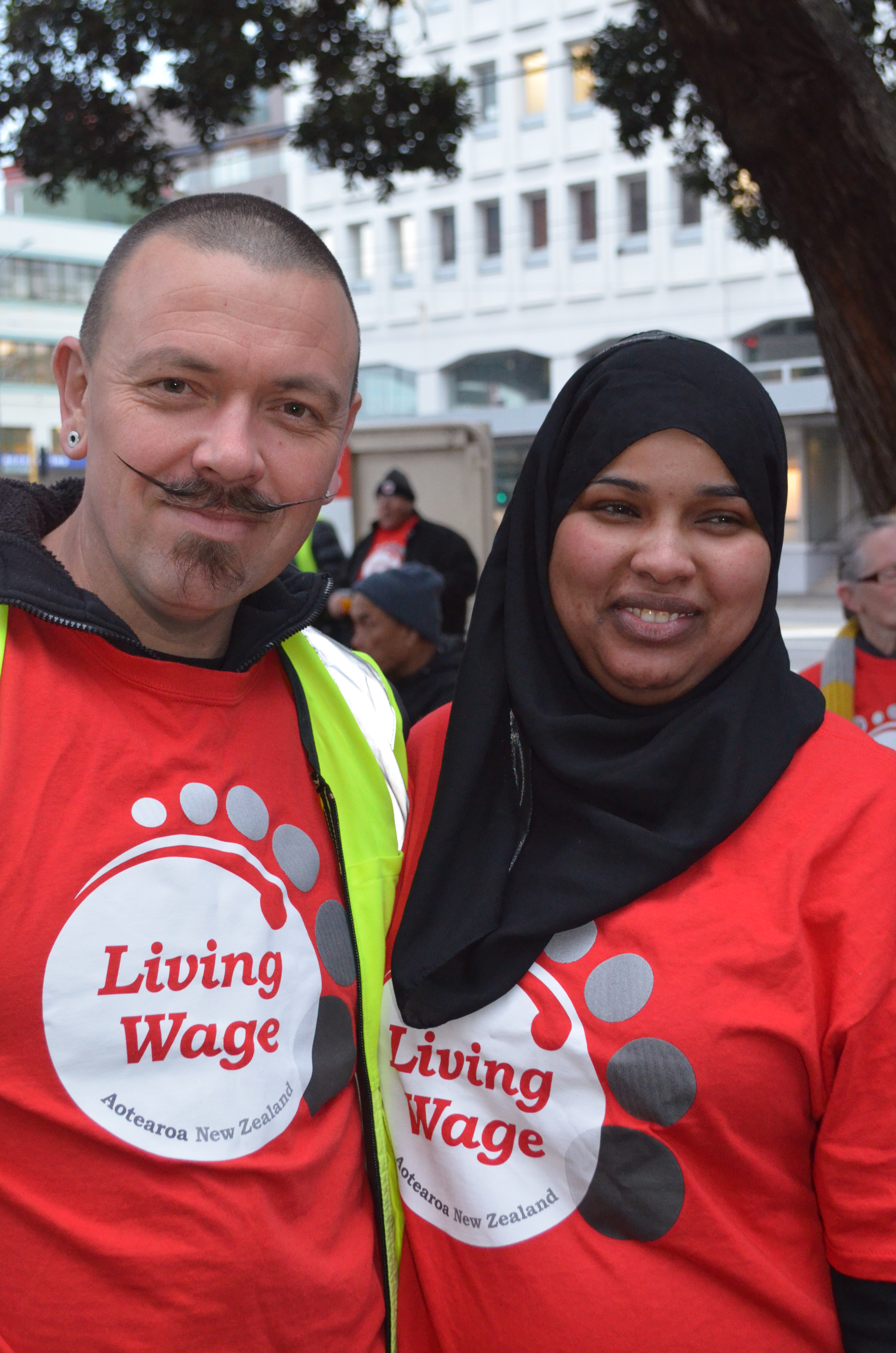
Kieran Monaghan (left) and fellow Living Wage activist Naima Abdi at the “Mop March” for Wellington City Council contract cleaners

As NZNO President, I have spoken of the need to strengthen union values within our organisation, as we continue to sharpen our professionalism – values like social justice, equity and solidarity.

By walking the talk on the Living Wage today, I believe we’re doing just that.