My ‘Report Card’: Nursing & Health in 2015

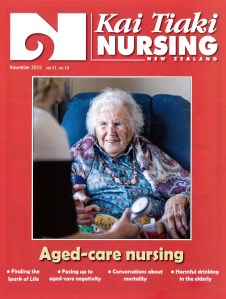
Nursing Review E-Edition 2015 cover
This article was first published in Nursing Review. Reposted with permission.

Nursing and health in 2015 made great strides forward in:

Great strides have been made this year in removing regulatory barriers that prevent nurses from making the best use of their knowledge and skills.

The movement of the Health Practitioners (Removal of Statutory References to Medical Practitioners) Bill through Parliament raises hopes that we’ll soon achieve this, enabling a more efficient and effective health system.

NZNO supports this Bill. We also hope our suggested improvements are taken on board by the Select Committee when it reports back to Parliament in February.

Passed but could do better next year:

The progress made in implementing Care Capacity Demand Management (CCDM) across the district health board (DHB) sector deserves a pass mark.

This year, Bay of Plenty achieved the distinction of being the first DHB “over the line”, meaning the core components of CCDM have been implemented for all their acute medical/surgical areas.

Hawke’s Bay and Taranaki DHBs joined the CCDM programme, and Auckland DHB began the enormous task of rolling it out across its many inpatient areas.

But from NZNO’s perspective, there are still five DHBs not currently active in the programme, with two more “pending”. Progress elsewhere remains painfully slow. There are even backwards steps at some DHBs.

Given the critical importance of safe staffing, both for NZNO members and for quality of care in our public hospitals, more definitely needs to be done in 2016.

Areas showing initial promise but failing to deliver in 2015:

For new graduate nurses, the year began with movement towards NZNO’s goal of 100 per cent graduate employment by 2018 at the latest. NZNO’s 2014 petition campaign, alongside a report from the National Nursing Organisations, had secured funding to cover Health Workforce New Zealand’s contribution towards another 200 NETP (nursing entry to practice) places.

Raising the cap from 1100 to 1300 places this year still wouldn’t provide full employment. And the actual number of places was always dependent on the ability of employers to offer jobs.

Sadly, cash-strapped DHBs and insufficient participation from other sectors has meant the promise of 1300 NETP places was not fulfilled.

In September, therefore, delegates to the NZNO AGM voted for a motion: “That NZNO continues to prioritise and support campaigns towards nurses and midwives entry to practice programmes, for registered nurses, registered midwives and enrolled nurses, with the campaign goal of 100 per cent employment of new graduates and improved health workforce planning in Aotearoa”.

Areas that failed abjectly:

Budget 2015 failed abjectly, once again, to provide sufficient funding for health.

According to Council of Trade Unions economist Bill Rosenberg, Vote Health was $245 million behind what is needed to cover announced new services, increasing costs, population growth and the effects of an ageing population.

The accumulated funding shortfall in government health expenditure for 2015/16 compared with 2009/10 is more than $1 billion.

This is what underlies the painfully slow adoption of CCDM, the failure of new grad employment opportunities to live up to their promise, and the growth of serious, related problems like care rationing.

This has to change next year.

The President comments: ‘Just a union?’

Kai Tiaki November 2015
This column first appeared in Kai Tiaki Nursing NZ, November 2015. Reposted with permission.

“It’s just a union” is a comment you hear about NZNO from time to time. It comes from decision-makers looking for a reason to ignore us, or from those few diehard colleagues who say they’ll never join. Sometimes you hear it from members, too.

This issue of Kai Tiaki Nursing New Zealand reports on the Council of Trade Unions Biennial Conference (p11), which I attended as part of a strong NZNO team. So it’s a fitting time to remember that yes, we are a union. But it might also be a good time to reflect on this “just a union” talk, and what to make of it.

I wonder if derives from a view that professional and industrial issues somehow belong to separate, even opposing dimensions. Perhaps there’s a related belief that greater attention paid to one dimension means less attention for the other.

After all, NZNO staff are organised into separate professional and industrial teams. One team focuses on strategies to strengthen confidence in nurses in support of greater status and authority, in line with other powerful professions. It works closely with members belonging to NZNO’s colleges and sections.

The other team focuses on strategies to promote fairness at work, for all. It draws on the power afforded by employment rights and the caring work we collectively perform. This team provides close support for workplace delegates.

The idea that they’re somehow in competition leads to arguments about the right “balance” – or worse, advocacy for one strategy, over the other.

In this context, talk of NZNO as “just a union” can arise and create division, where none should exist. This is because professional and industrial realities are not opposing dimensions, but inseparable parts of a whole.

This is clearly embodied by those members who are both leaders in their college or section, and delegates in their workplace.

So strategies should not be based on one part of our reality, or the other, but on the shared goal we’re trying to achieve.

I believe that in the broadest sense, the goal we are pursuing as NZNO members is the wellbeing of people. And we are people too, just like our patients, whānau and communities.

Viewed from this perspective, our industrial and professional (and political) strategies become mutually reinforcing approaches. When members are presented with this perspective, I think it feels right, at a gut level.

It can be hard to uphold these truths sometimes, I know. Our allies and external stakeholders tend to pull us in one direction or the other.

Some of our union allies, for example, are suspicious of “professionals”. And some health sector leaders don’t trust unions.

But we shouldn’t let external forces define us. We should stand on our own whole reality, and reject attempts to divide it.

We are not “just this”, or “just that”. By proudly embracing our dual identity as a professional association and registered union, NZNO members can achieve our common goal together.

Nursing Review: Q&A with Grant Brookes

Nursing Review October 2015
This interview first appeared in Nursing Review, October 2015. Reposted with permission.

Q. Where and when did you train?

A. I was one of the young BN pioneers, going forth blinking into the bright new day for nursing education. In 1992, I joined the first intake of the undergraduate degree programme at Otago Polytech. After a gap year and some part-time study, I graduated from there in 1996.

Q. Other qualifications/professional roles?

A. Prior to my current position, my most recent professional role was on the National Committee of the NZNO Mental Health Nurses Section, where I served as co-editor of our Head2Head journal.

Q. When and/or why did you decide to become a nurse?

A. Working in hospitality after leaving school, I found I enjoyed serving people. I also relished an intellectual challenge, completing a physics degree and a diploma in liberal arts at Otago University. The Bachelor of Nursing programme seemed to bring these two things together. But after graduating with my BSc(Hons), I sought above all a meaningful job I could put my heart and soul into. Friends and family more conditioned by gender stereotypes asked why I didn’t do medicine. But while volunteering at the Otago Community Hospice in 1991, I found the rewarding career I was looking for – nursing.

Q. What was your nursing career up to your latest position?

A. Providing direct care for mental health service users has been my passion. So I’ve spent my career at the coalface, in the community and in inpatient units in Auckland, London, Wellington and Melbourne.

Q. In recent years you have stood for Capital & Coast DHB, Hutt City Council and now have been elected NZNO president?  What has drawn you to seek public office?

A. Working in mental health, as I have done, you see social exclusion up close. The reality of the social determinants of health is unavoidable. And as an NZNO leader, I have seen how the voices of nurses can be marginalised and ignored. In 1987, the World Health Organisation published Leadership for Health for All: The Challenge to Nursing. The strategy document said: “Because politics is the vehicle of policy making and social change, some nurse leaders will have to combine the gentle art of nursing with the rougher one of political activity”. I have stood for public office to respond to that challenge. I have strived to provide a voice for those who are under-represented, to focus public debate on the social determinants of health and to help people take action themselves for change. 

Q. What are you looking forward to most about your new nursing leadership role?

A. I am looking forward to continuing to connect with NZNO members. I’m committed to bringing their voices, their issues and successes to the board table, so that our organisation is guided the membership. I am also excited about strengthening the bicultural relationship within our organisation, in order to support stronger action for Māori health. 

Q. What are you looking forward to least?

A. See below, for what I’m reading instead of the interesting books gathering dust at my bedside.

Q. If there was a fairy godmother of nursing what three wishes would you ask to be granted for the New Zealand nursing workforce?

A. I would ask for safe staffing, so that nurses can deliver the care we dearly want to provide, and not go home utterly exhausted or in tears. I’d ask for pay equity – an end to the discrimination based on gender, ethnicity or sector – and for a supported entry to practice place for every new nurse.

Q. What do you think are the characteristics of a good leader?  And are they intrinsic or can they be learnt?

A. My favourite quote about leadership comes from Dr Cornel West, a Professor of Philosophy whose career has spanned Harvard and Princeton: “If your success is defined as being well-adjusted to injustice and well-adapted to indifference, then we don’t want successful leaders. We want great leaders – who love the people enough and who respect the people enough to be unbought, unbound, unafraid and unintimidated to tell the truth”. These are characteristics which can acquired, through practice, by some.

Q. What do you do to try and keep fit, healthy, happy and balanced?

A. I have recently become a runner. This year I entered the 10km race at the Wellington Marathon, as part of the Capital & Coast DHB Team. I was chuffed to finish 77th out of 1,105. Our team came third overall and raised $4,000 for the Heart Foundation.

Q. Which book is gathering dust on your bedside table waiting for you to get round to reading it?

A. There are two books gathering dust there – Maire Leadbeater’s Peace, Power & Politics: How New Zealand Became Nuclear-Free, and The Chimes by Wellington author Anna Smaill. I confess that when it comes to novels, I’m one of those time-poor individuals who lets the Man Booker judges do the searching. The best book I’ve read this year, however, is Naomi Klein’s This Changes Everything: Capitalism vs the Climate, which is now a feature documentary. It was timely, as delegates at our AGM last month voted that NZNO should support fossil fuel divestment. 

Q. What have you been reading instead?

A. In week two of my new role, sadly my reading seems to be governance manuals, terms of reference, financial statements and previous minutes.

Q. While waiting in the supermarket check-out queue which magazine are you most likely to pick up to browse and why?

A. I sometimes despair at the New Zealand media landscape. The only magazine I’m likely to browse at the check-out – for intelligent commentary, fashion and more – is Rolling Stone

Q. What are three of your favourite movies of all time?

A. Selecting three all-time favourites would be too hard. But my top three from the last year are Selma, Testament of Youth and The Dark Horse. Thanks for asking!

Taking the temperature of NZNO

Kai Tiaki Oct 15 cover
This article first published in Kai Tiaki, October 2015. Reposted with permission.

This issue of Kai Tiaki Nursing New Zealand reports on NZNO’s annual general meeting (AGM) and conference, held in Wellington last month. (See pp12-19.) As a three-day affair, starting with the college and section day and National Student Unit (NSU) AGM, and proceeding through the business of the AGM and then onto the conference, the annual gathering provided an unparalleled opportunity to check the vital signs of our organisation, in the current environment.

The 176 NZNO members who took part will be surveyed and, in good time, their feedback will be analysed, collated and presented. But for now, I’d like to document my own initial assessment and plan, to supplement the priorities I outlined in my speech to AGM as incoming president (p18). I believe a healthy NZNO flows on to greater wellness for the people we care for every day.

Baseline readings for many of our systems are good. As chief executive Memo Musa reported, NZNO membership continues to grow, even if there are areas which need attention (p12). Our finances are healthy, and some environmental factors – such as rising support for pay equity in the wake of Kristine Bartlett’s court wins – support healthy development for NZNO and our wider community.

The high level of agreement on our collective vision and mission, reflected in the unanimous vote by those at the AGM to adopt the 2015-2020 strategic plan, shows an organisation in good heart.

And among the colleges and section reps who gathered on day one, the news is that, while a few committees are struggling a little to engage their members fully, many are powering ahead and producing work which is influential nationally and internationally.

But some other signs and symptoms on display at conference, and some other environmental factors discussed there, are less reassuring.

The main business of AGM each year is to debate and vote on remits, either to amend our constitution, or to set policy priorities for the next 12 months. It is then up to the elected board of directors to govern NZNO in accordance with the latest version of the constitution and any agreed policy priorities.

For many delegates at this year’s AGM, the remit debates might have confirmed Winston Churchill’s famous observation “that democracy is the worst form of government except all those other forms that have been tried”. 

Despite the frustrations of meandering debate, poor time-keeping and confusion over meeting procedure, the remits did allow the democratic voice of members to be heard at our top decision-making forum. And a theme could be heard in this membership voice. Among the 12 remits, five indicated members want more say in running NZNO, more checks and balances for the board, or both. During the debates, one delegate said it appeared some members feared our board and leaders.

Meanwhile, the board put forward a remit of its own, to amend the constitution and grant itself the power to establish the overall strategic direction and policy of NZNO. This proposal was rejected, so the power will remain with the members who participate in the AGM. But it seemed strangely at odds with the theme of the other remits. Strengthening the relationship between NZNO’s elected leadership and members will be a top priority for me over the next three years, in my role as co-leader. Listening to members at every opportunity will be essential to achieving this.

In our wider environment, too, there are some noxious influences. In his speech to conference, Health Minister Jonathan Cole- man reminded us that our sector received the largest share of new spending in this year’s Budget – $400 million, in all.

What he did not mention was that this was less than the amount needed to keep up with rising costs, or that increases in previous years have also failed to keep up. Council of Trade Unions economist Bill Rosenberg estimates the accumulated funding shortfall in government health expenditure for 2015/16, compared to 2009/10, is more than $1 billion.

Impact of funding shortfall 

Many NZNO members are feeling this funding shortfall. They are finding they must do more and more, with no corresponding increase in resources. And, in turn, it is placing greater strain on NZNO delegates and staff, as stressed members seek support.

This environmental factor has not yet caused serious harm to NZNO. But ensuring workplace delegates are well-supported and strengthening NZNO’s industrial presence will help to inoculate us from its toxic effects, while we campaign to change it.

And we will need to be fully fit as an organisation, to deal with the health effects of worsening social indicators and entrenched inequalities. For example, we must address the scandalous gap in life expectancy between Māori and non-Māori New Zealanders which, as Heather Came reminded us all at conference, is still 7.2 years for women and 7.4 years for men (p16).

After a brief time as president, then, this is my one-page initial assessment and plan for the organisation, as it presented in “the clinic” last month. As I stressed in my speech to AGM, NZNO leaders have a responsibility to lead, but in a democratic, member-run organisation like ours, the direction is ultimately set by the members.

So what do you think about the health of our organisation? Why not pen a letter to Kai Tiaki Nursing New Zealand about it now? Or, if you prefer, drop me an email at grantb@nzno.org.nz or message me via Facebook or LinkedIn.

I look forward to hearing your thoughts. •

Grant Brookes, RN, is NZNO’s newly-elected president.

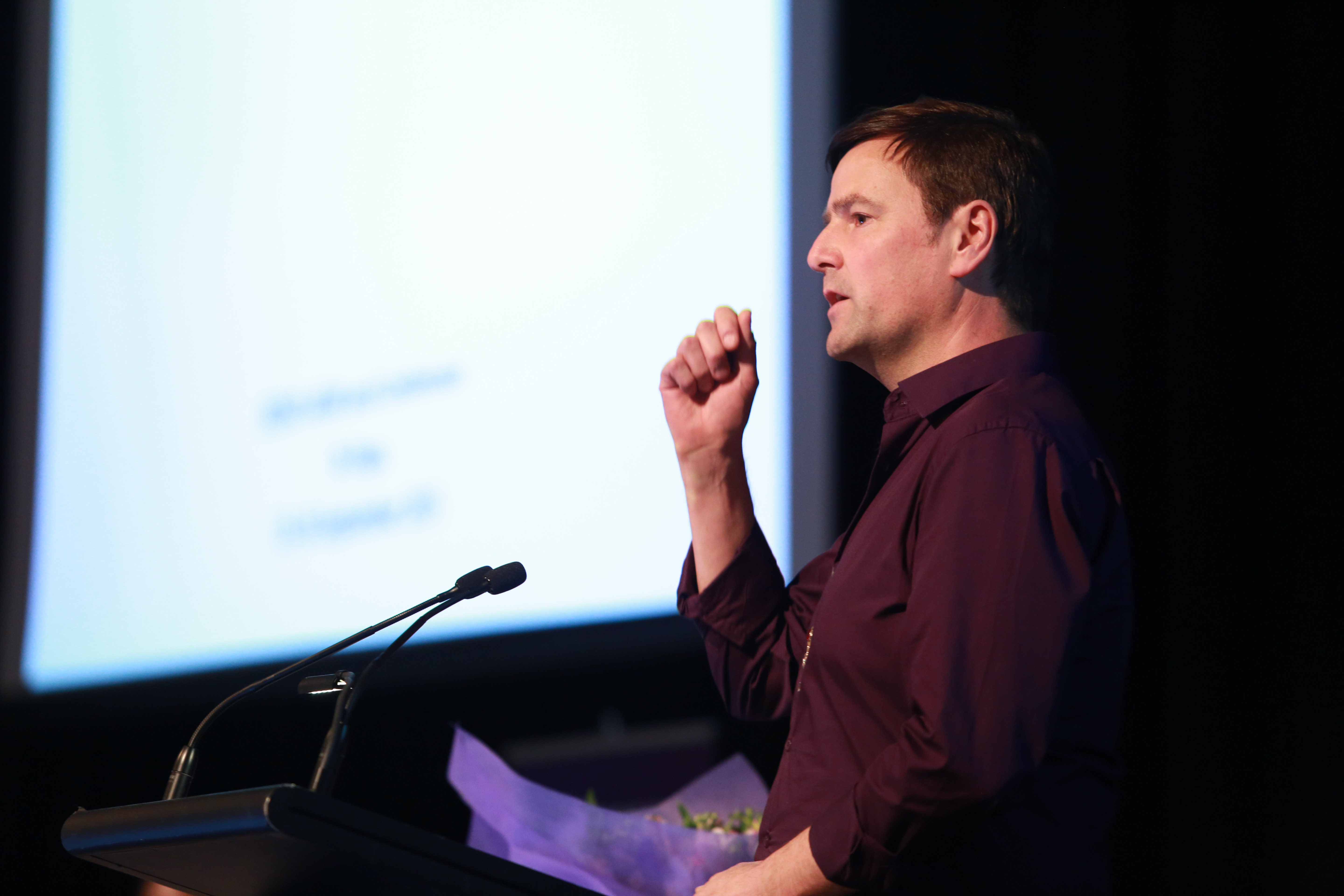
Presidential address to NZNO AGM 2015

259A0890

Whakarongo ake au 

Ki te tangi a te manu nei

Tūī, tūī

Tui, tuia.

Tuia i runga

Tuia i raro

Tuia i roto

Tuia i waho

Tihei Mauri Ora!

Ko te mihi tuatahi ki te Atua, nana nei ngā mea katoa.

E te iwi kāinga, tēnā koutou. Ko Taranaki Whānui ki Te Ūpoko o Te Ika te tangata whenua, ā, kei a rātou te mana whenua i tēnei wāhi. 

E te maunga e tū mai rā, tēnā koe Pukeauta. 

Ki te Awa Kairangi, tēnā koe. 

Ki ngā mate, haere, haere, haere. Rātou te hunga mate ki a rātou. Tātou te hunga ora e huihui mai nei, tēnā tātou. 

E rau rangatira mā, e nga manuhiri tūārangi, tēnā tātou katoa. 

I listen to the call of the bird, the tui. Bind together, stitch together, weave together, those things from above, those things from below, those things from within us, those things from around us.

Greetings to the Atua, and to the tangata whenua, their sacred mountain and river. Greetings to those who have passed on, and to the living gathered here. To the many leaders, and guests from afar, greetings to one and all.

I will start with the thank yous. To those in this room and beyond who elected me to be NZNO President, I am honoured by your support.

I’ve gotta say, you guys must have been pretty sure of yourselves, because it seems you were prepared to overlook a fairly obvious shortcoming in your new President.

His gender, of course!

But all jokes aside…

I began by talking about a bird, a tui. It is a customary chant, among some iwi, for opening a speech.

But here, today, what is this bird I harken to? What is this tui?

It is the membership of NZNO. It is their call which binds us together.

NZNO members have voted for change. What does the result mean – for us and for NZNO’s direction over the next three years of my term?

Firstly, and most obviously, the vote represents the decision of the 6,263 people who took part in the ballot – 13.6 percent of the membership.

And what does this 13.6 percent signify?

On the one hand, it represents the second highest turnout in a Presidential election since NZNO’s formation in 1993.

And yet, on the other hand, 13.6 percent is still a small voice, hardly enough on its own to be the clear song of the tui.

For many of these 6,263 members, however, the Presidential election was not the first time this year that they’d voted for change. In May, over 9,000 members in the DHB Sector took part in a vote to overwhelmingly reject the employers’ offer, and to call for something better in their MECA.

I think these two votes – for a better deal at work, and for a new NZNO leadership – have to be seen as interconnected. There is an obvious reason for this – members knew me as both a Presidential candidate, and a member of the DHB MECA negotiating team.

These two roles were kept separate. But as part of the negotiating team, I became privy to information about the views and priorities of large numbers of NZNO members. For those in the DHB Sector, I learned what you think about your pay, your staffing levels, your professional development opportunities. I found out how you feel about the way you’re being treated.

As we start to supplement the message in the election results in this way, it can be seen how the call of the tui starts to grow more distinct. We hear that members want a stronger industrial presence, as well as a stronger professional profile, for NZNO. And that, in turn, shaped the election outcome.

Then there are other authoritative sources of information on what members want. I want to recognise in particular the perception of our outgoing President. In Kai Tiaki this year, Marion has commented that members want more “visibility in the media” from the President. And she expressed the belief that “both co-leaders needed to be more visible in the organisation and engage more with member groups”.

As I travelled this year to met with members from Dunedin to Auckland, and used all social media avenues at my disposal, these desires of the membership found their instrument.

And finally, we also need to remember that NZNO members are part of the community, and will share many of the prevailing public attitudes, like those reported in the quarterly survey by Roy Morgan Research.

The combination of poverty and inequality emerged as the most important issue in the survey back in 2013, and has only grown in importance since then. It is now far and away the biggest problem facing New Zealanders, according to the poll.

NZNO members work at the sharp end of all this. We see the distressing health inequalities daily in our practice. We see the impact of poverty, and the disparities for Māori and Pacific people.

Many, many things will be needed to reduce these health inequalities. But I will mention two. Tackling this issue for members will require an unrelenting focus by NZNO on the social determinants of health. And progress will not be possible without the strengthening of NZNO’s bicultural partnership.

In a democratic, member-run organisation like NZNO, leaders have a responsibility to lead. But ultimately, our direction is set by the membership.

Over the course of this year, members have spoken, and if we listen carefully then the meaning of their call is clear. In any event, it is clear to me.

At every opportunity during the election campaign, and since, I have stressed my commitment to building NZNO’s dual identity as a professional association and registered union.

In the real world, professionalism does not exist in a vacuum, but always in the context of industrial realities. On the one hand, our professional vision gives direction and purpose to our union organising. And on the other, our professional aspirations to deliver excellent care are given real weight only when backed by collective strength.

This perspective, I believe, has now been endorsed by the membership. And I am pleased to see it reflected in our new Strategic Plan which we endorsed today.

Flowing from this, I maintain that building NZNO’s dual identity means developing confident workplace leaders and delegates who are well-trained and well-supported, based on NZNO’s organising model. And it means supporting members whenever they join together in collective action for nursing and health.

During the election campaign, and since, I have also demonstrated my commitment to accessibility. I will continue to be available, in person in your locality or via email and social media. And I pledge to help make your issues visible, as part of supporting a higher media profile for NZNO members generally. This is the will of the membership.

I’m pleased to report that last night I was interviewed by a Fairfax journalist, for an article on pay equity, and I understand that there will be an NZNO voice in the Sunday Star-Times this weekend.

In demonstrating commitment to Te Tiriti o Waitangi, Tikanga Māori, Matauranga Māori and bi-cultural values, I hope to lead by example – for example by learning and modelling the use of Te Reo me ōna tikanga – the language and its codes of conduct. All the while, acknowledging that the authority, or mana, remains with the holders of cultural expertise in Te Rūnanga.

Because over and above the requirements of our Constitution, it is my personal conviction that what’s good for Māori is good for the majority.

I will be upfront about an area of possible debate within the new NZNO leadership team, however. I will be monitoring how practices drawn from the corporate world are used, in pursuit of the strategic goal of making NZNO an “Effective Organisation”? I am confident, though, that ongoing, constructive dialogue will ensure that business and commercial acumen will serve, rather than dominate, NZNO’s agenda for nursing and health.

Heeding the voice of the membership is not a one-off event, but a continuous process. As President, I will keep listening to the call of the tui.

And I hope that as members are heard and supported, and as members see their views reflected in our direction, that more and more are encouraged to write that submission, or attend that meeting. I know that actively participating in NZNO membership structures means voluntary work, on top of long hours in paid employment or study – and often after caring for family members as well.

But whether you’re in a Regional Council or a Health Sector National Delegates Committee, a College or Section, Te Rūnanga o Aotearoa NZNO or the National Student Unit, I want to hear from you and your constituents. And I’ll give a special plug right now for perhaps the most important group you never heard of until today – the Membership Committee. Along with Te Poari, you are the throat of our beautiful blue-black bird, where the voice emerges. More power to you!

Over the rest of today and tomorrow, the transfer of NZNO leadership from the outgoing to the incoming office-holders will be completed.

I want to pay tribute to Marion, for the many years of service she has given. Starting in 1998 as the local Chair of the Practice Nurses Section, Marion has dedicated the last 16 years of her life to NZNO. She has represented us on the national and international stage. Marion, I wish you all the very best in her next venture. I know you will continue to make a valuable contribution, wherever you direct your energies in the future.

And I want to reiterate that NZNO members have voted for change, and the turnout has delivered one of the strongest Presidential mandates in NZNO history. I intend to use this mandate to serve the legitimate and collective interests of all members and the health of the people we care for, as I have now outlined.

Over the next three years, I look forward to working with the Kaiwhakahaere, with the CEO, with all the members of NZNO’s governance and leadership teams and with our external stakeholders, on this agenda for change.

Nō reira, tēnā koutou, tēnā koutou, tēnā koutou katoa.

Thank you all. Now let’s take the next step together.

Tēnā koutou katoa.

To each and every one of you who voted, and who supported me in a myriad of other ways, I say thank you, thank you, thank you all.

As the election results show, my bid to become your choice and your voice as President of the New Zealand Nurses Organisation has succeeded. But the famous whakataukī has never been truer: “Ehara taku toa i te toa takitahi, engari he toa takitini”. Mine is not a solo success, but a success of the many.

Together, we have taken a step towards change for NZNO.

I have pledged to be accessible to members, and to make your issues visible. And now, after a short break with my family, I will start fulfilling my election promise to be available to you, in person in your locality or via email and social media, so that we can continue to work together.

In particular, I look forward to talking with those who supported other candidates or who didn’t vote. I would like to hear about your issues and aspirations for NZNO, so we can advance them together over my term as President. Together our members’ diversity can be a strength.

It is also a truism of the union movement that if you want to make change, then voting once every three years is not enough on its own. This is the case inside NZNO, just as it is on the national and local political stage.

But we have shown that when NZNO members act collectively, we can make change. In the course of my election campaign, for instance, I highlighted how thousands of us working together delivered 200 extra places for new graduate nurses, and how DHB Sector members were able to secure an improved offer from their employers. 

As your next NZNO President, I will support members whenever you join together for health. We need to do that in many ways.

NZNO is a member-run organisation. Those members who actively participate in our organisation do a bit here and a bit there after long hours at work or study, and often after caring for family members as well. But added all together, this collective activity is what can drive the change that members have voted for. 

Whether it is the workplace delegates, who feed into the NZNO Regional Councils and Health Sector National Committees, or the members who participate in NZNO Colleges and Sections, or those who belong to Te Rūnanga o Aotearoa NZNO or the National Student Unit, I look forward to taking the next step with you all.

Together, we are strong enough to keep making change for our members, for our profession and for the health of New Zealand.

Stronger together: reflections on the DHB MECA campaign

Next week, NZNO members in DHBs around the country will start voting on a new offer from their employers. Details of the offer are available here.

It comes after members voted in May to reject the first offer, sending the NZNO and DHB negotiating teams to mediation.

It is now exactly a year since I was nominated for the NZNO negotiating team by my fellow delegates at Capital & Coast DHB. So it’s a good time to reflect on the journey to this point – both for myself, and for the 26,000 other NZNO members I have been representing.

It was a great honour, last October, when NZNO members in DHBs around the country elected me to be part of the MECA negotiating team.

And it has been an absolute privilege to work with the thousands of passionate, committed NZNO members who have propelled the negotiations to where we are today.

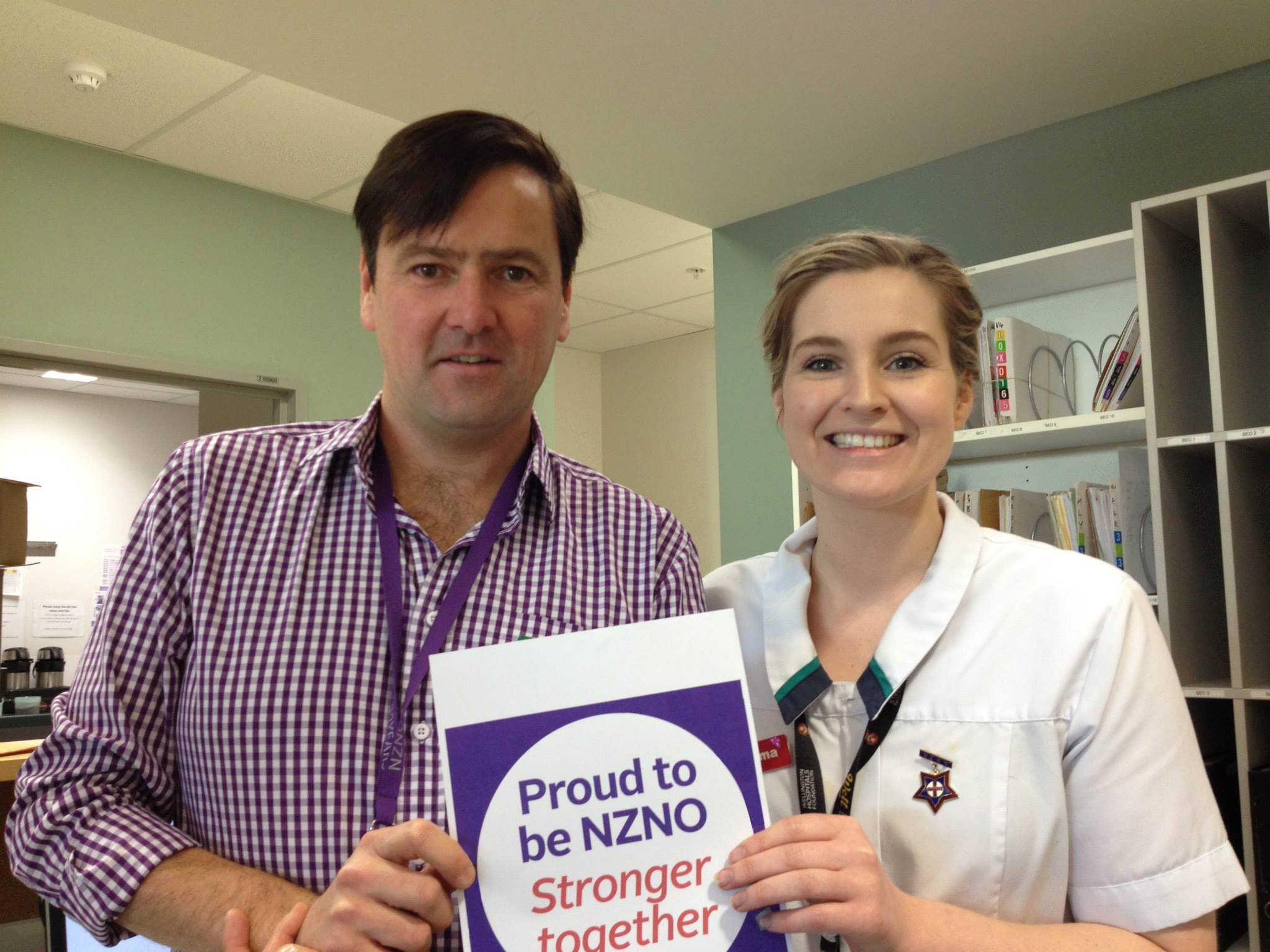
CCDHB visit
We’re Stronger Together

I have met many of you over the last three months, during my visits to Waitematā, Auckland, Counties Manukau, Waikato, Lakes, MidCentral, Wairarapa, Hutt Valley and Canterbury District Health Boards. I only wish my annual leave balance (and bank balance) had allowed me to visit the other ten DHBs, as well!

Some of you I saw at the ratification meetings in May. There, thousands of members turned out to vote overwhelmingly against the DHB offer – the highest level of participation in at least a decade.

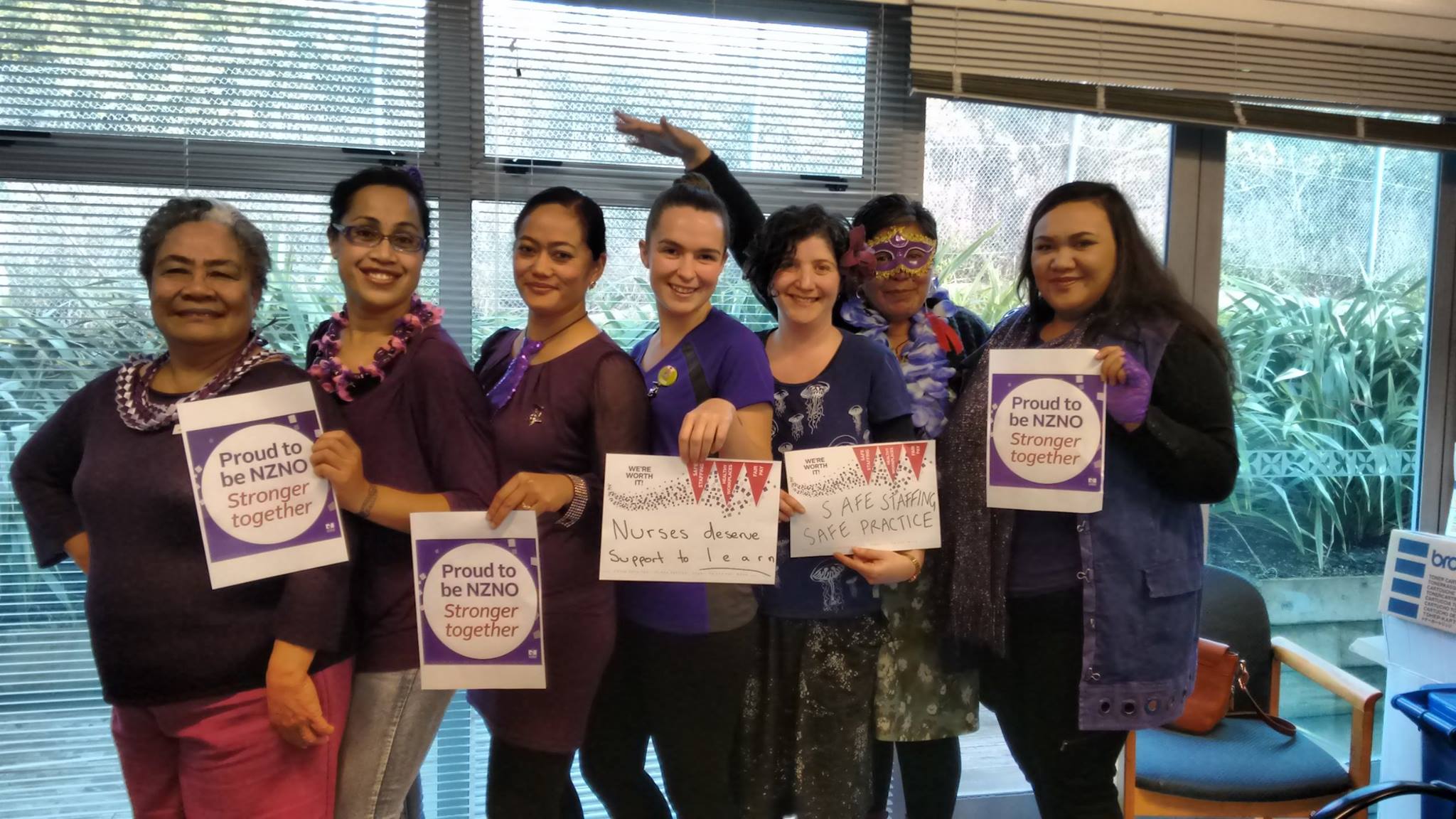
Others I met in the workplace, where you collectively supported the “Go Purple” Days of Action, and where around 5,000 of you signed letters telling your DHB Chief Executive: “We are writing to let you know that we are standing strong for health.”

These actions we took together showed employers and government that we were growing stronger.

Now the negotiating team is recommending that members accept the new offer.

At the start of bargaining, I was asked to draft a set of Values and Principles to guide the team. Amongst other things, we agreed we would make decisions by consensus where possible, by majority where necessary, and that we’d accept collective responsibility for decisions reached.

But members who are deciding who to vote for in the NZNO elections also have a right to know what I think, personally.

Do I believe the offer recognises what nurses and healthcare workers are really worth? No, I do not. We need to keep our eyes on that prize.

If we focus only on how far we have to go before we reach that goal, however, we will probably be disappointed by any offer made this year. So we also need to look at how far we have come.

Up until February, the State Services Commission was insisting that pay increases must be no more than 0.7 percent. That unreasonable spending cap has been pushed aside. By working together, we have come a long way.

It is not my place, or my wish, to tell members to settle for too little.

But the new offer will deliver real pay rises, above inflation, and other improvements which will allow quality care. It can serve as a platform, to relaunch the journey towards our ultimate goal.

Despite the fact that member participation this year has been the highest in a decade, reaching that goal will take much greater participation, a change in economic and political circumstances, or both.

The negotiating team’s stated reasons for recommending acceptance now include the fact that “there is an improved wage offer and a reduced term”, and “progress has been made on addressing a number of outstanding matters”.

But there are other reasons, too. For me, personally, it is because our achievement is the result of your collective action as members, and this deserves to be recognised and valued.

Our MECA campaign also had great support from outside NZNO’s DHB Sector. Members in the Primary Health Care Sector showed their support.

Nurses at the Porirua Union & Community Health Service supporting DHB Sector members.

So did other unions. “We support the decision by NZNO members to reject the offer made to them by the DHBs”, said PSA national organiser Ashok Shankar.

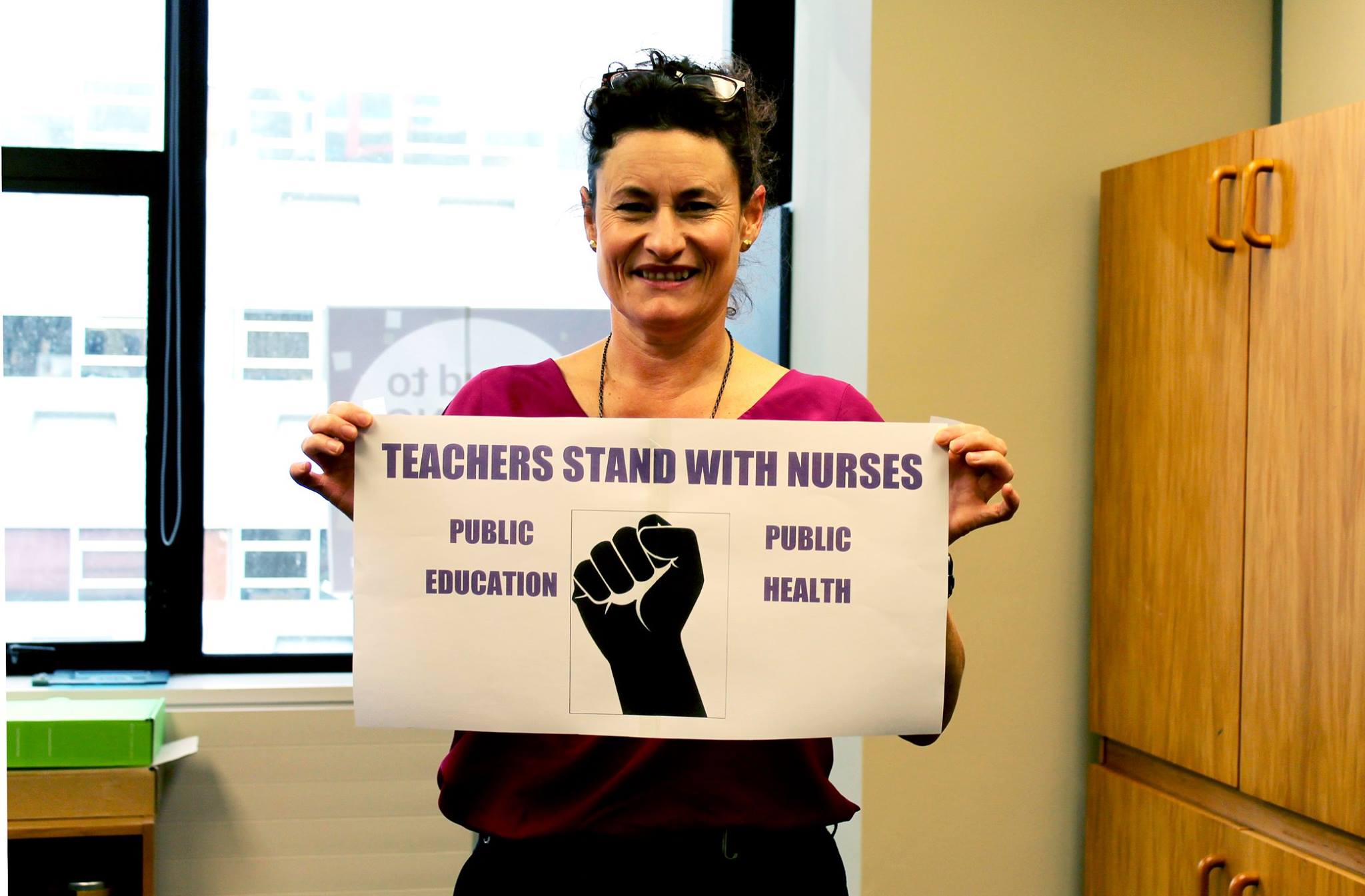
Even the President of the PPTA secondary teachers union, Angela Roberts, joined in our “Go Purple” Day of Action.

PPTA President Angela Roberts %22Teachers stand with nurses%22
PPTA President Angela Roberts

Where was our President?

The role of our elected leader includes being the public face of the organisation. The President’s invisibility throughout the negotiations is even more surprising, given the policy remit passed at the last AGM, that NZNO commits to supporting a new “Pay Jolt” in the upcoming DHB MECA negotiations.

“As an industrial matter, it is up to the members covered by that agreement to determine their own issues and set their own priorities”, explained the rationale attached to the remit.

“But there are also reasons why, as a matter of policy, this bargaining round will warrant a ‘whole of organisation’ commitment from NZNO.”

If you vote to elect me as your next President, I pledge to dispel the cone of silence which has engulfed our leadership. I will make your issues visible – including the issues you’ve taken action to address through the DHB MECA campaign.

And I pledge to support members whenever you join together for health. As the DHB MECA campaign has shown once again, when we take collective action we can succeed. Because together, we’re stronger.

Why vote in the NZNO elections?

Stop. Pause what you’re doing just for a moment, and think.

What is the one thing you would like to be different about your job, about the heath system?

Keep thinking about that.

Maybe there’s more than one thing? That should be different! It’s just so wrong.

Can you change it?

Of course not, otherwise it would already be different, right?

But what if thousands of nurses, HCAs, midwives, caregivers and students were working together to change it? And if they were backed by policy experts, lawyers and advisors? Allied with hundreds of thousands of other union members. Maybe… then?

Who will lead that team, which could make the one thing different? 

That is your choice.

And if you could speak up for health, without worrying about what it meant for your job, what would you say? How loud would you speak?

Who can be that loud voice? Someone who represents you, and who doesn’t have to worry about their job. Right?

Someone who can make it ok for you to speak up, because they’ve said what you wanted to say, and you’re just quoting them. Someone who can empower you.

That is your voice.

The NZNO election is about who will be your choice, your voice. It’s about you.

This is why you should open that email from elections@electionz.com, or that envelope, or pick up the phone and dial 0508 666 003 and ask for a new one, before noon on 7 August.

This is why you should vote.

Why you should vote flyer
Click on the image to download a pdf version of this flyer, for easy local printing.

DHB delegates speak: Why we’re backing Grant for President

Guest blog post by Erin Kennedy, lead RN delegate at Capital & Coast DHB

As voting continues for the NZNO Presidency, it’s heartening to hear that more members seem to be using their democratic right to choose our leader this time round.

At CCDHB, members and delegates have been lucky over the past few years to see Grant in action as a delegate and supporter of all our members.

Some of our delegates were keen to share their reasons for supporting Grant with members from other workplaces.

Simon Bayliss, a delegate in Theatres (right), said there was no doubt in his mind that Grant was the man for the job.

Simon Bayliss 2011“I like a guy who I can call an activist, who gets involved and cares about so many issues – big and small.”
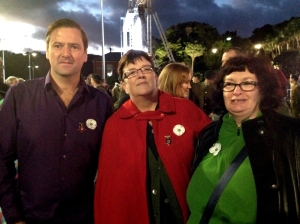
Women’s Health delegate Ann Simmons (right, at this year’s ANZAC Dawn Parade) said NZNO members deserved Grant as president in today’s difficult political environment.

Anzac nurses“He’s enthusiastic, energetic, intelligent, intuitive, has integrity, is one of us and can be trusted.”
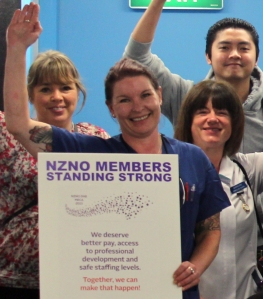
Kenepuru Surgical Unit delegate Emma Brooks said Grant was truly passionate about frontline RNs, HCAs, ENs and midwives. “He has not lost sight of the day to day struggles we face, or become lost in the corporate bureaucratic quagmire.

I support Grant Brookes because he is courageous enough to speak the truth. I support Grant because he is sincere and dignified. I support Grant because I believe in his message – Your Choice, Your Voice. I want an NZNO president who is visible, accessible and trustworthy – this is Grant Brookes.”

Delegate Kathryn Fernando from the Kāpiti Health Centre (front row, centre, at the presentation of the People’s Select Committee Report on the ERA in 2013), supports Grant because of his energy, passion, intelligence and commitment to social justice.

People's Select Committee report on ERA, 11.12.13 (crop)

“He is a very good communicator and would represent nurses, caregivers, ENs and midwives very well if he were to become president.”

PACU delegate Katrina Hopkinson (centre) said she found Grant approachable and a great mentor.

NZNO MECA meeting, Wellington, 15.10.14 (crop)”I’ve seen close up how much energy he puts into NZNO, both as a delegate here at CCDHB, and on the National Delegates’ Committee. He cares deeply about others and works for change.”
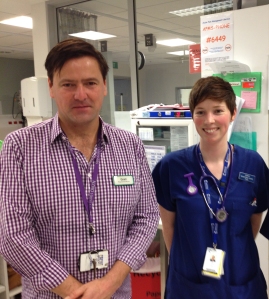
CCDHB 10.6.15 IMG_3393 (crop)Katrina’s fellow delegate in the Post Anaesthetic Care Unit, Jemma Irvine, states simply:
“He’s active and involved and knows the reality of nursing today.”

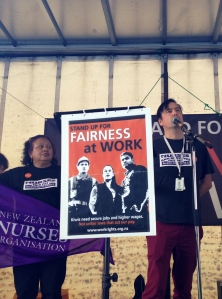
Ward 6 North delegate and Enrolled Nurse Anita Te Kahu (pictured at the CTU Fairness at Work rally in 2013) is another long time colleague who has seen Grant in action over the years. Asked why she supports Grant, her answer is simple. “Why the hell not? He’s the only one that is worth it!

Fairness At Work NZNO 20082013 (crop)

He is a people’s person, approachable, a listener and a thinker. Committed to a mission, he does not give up. As the new NZNO President, Grant will continue to be our mouthpiece and fight for what is right.

I believe he will continue to mix with the workers, those at the coal face every day.”

11232340_10152752314507035_731593285_oAnd finally, as CCDHB’s lead RN delegate, I have worked closely with Grant on many issues affecting our members, including safe staffing, underpaid shift leave, personal grievances and budget cuts.

His commitment to our members and to our union values is unmatched by any other candidate. If an issue needs sorting or a members needs support, Grant is there – frequently on his day off or after a tough night shift. Vote Grant Brookes for president.

_______________________________________

Members should have received an email with instructions on how to vote online on 19 June. (If you haven’t, check your spam folder). Or, if you’re one of 8,000 or so members without a current email address on file with NZNO, you should have received voting papers in your letterbox. If you haven’t received either, phone the Member Support Centre on 0800 28 38 48. Remember, democracy is only as strong as the number of us who have our say!